
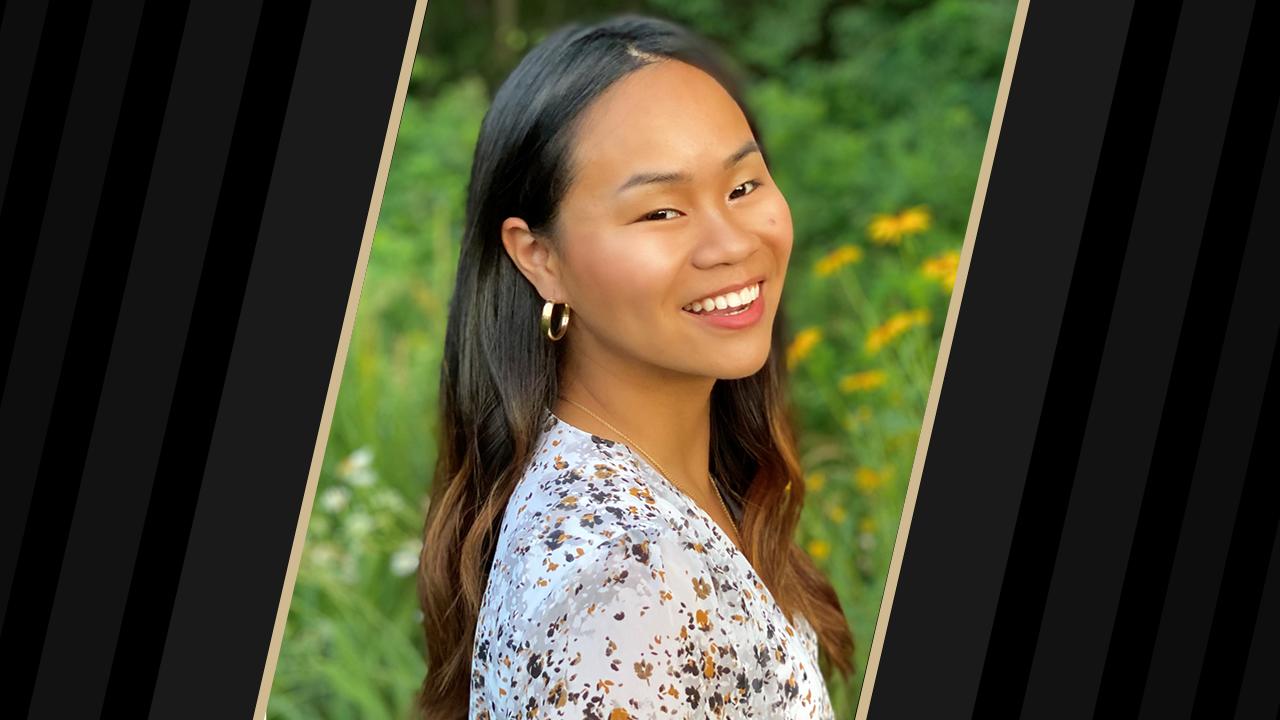
Amy MacLaren is a 2022 graduate of the Human Resource Development (HRD) program at Purdue's Polytechnic. She's a SHRM-certified HR professional who's now in a career foundation program in the aerospace industry. MacLaren's current rotation involves Total Rewards, which is the area of HR that manages compensation and benefits. She shared her secret ingredient for success, tips for HR professionals, and what it means to be a Purdue HRD grad when we asked her to share her story with us.
Q: How did you find out about the HRD program at Purdue?
MacLaren: I was adopted from China and had the blessing of being raised in the U.S. in Fishers, Indiana. During high school, I was interested in computer science, but through summer programs at Polytechnic, I found out it wasn't my fit. I still wanted to go to Purdue, so I started in supply chain, then switched to accounting and finance. I was president of my business fraternity Beta Alpha Psi, and I liked my leadership role, the career fairs and helping students. One of my friends from the fraternity had a girlfriend in Polytechnic at the time who suggested I look into the HRD program.
I never looked back. The curriculum was very focused in HR with learning and development, organizational change, analytics and a capstone course. I really liked the technical skills I'd learn. Purdue Polytechnic does well at teaching modern-day HR and technical expertise. During my internships and working full time now, I am able to use these technical skills, establishing my niche and personal brand of HR meets tech.
What are your career goals now that you have your bachelor's and master's degrees?
I'm one of those people who is very open-minded. I'm kind of an experience explorer. I have done some soul searching, and I want to be a leader in some capacity whether that is a manager, director, or even a CHRO. I know I want to make a great impact on the world through the lens of HR. The title doesn't matter-it's the impact I make and the lives I touch and support. I always want to continue to lead with integrity, care, advocacy, relatability-to be someone warm and welcoming. That's my career goal, plus having a family!
Did serving as a TA help you now that you're in the workforce?
It helped so much! I'm not a shy person, but as a TA I built skills for talking about topics of substance to groups, facilitating group workshops, and giving on-the-spot responses. I've been able to apply all of that right away. Whether that is in small group settings or facilitating site-wide initiatives, I can use my learned communication skills to be engaging and also valuable for every audience.
How did your internships impact you and your career?
I had a few internships that all played a role in my career. At Caterpillar, I developed Excel skills through my talent management and acquisition role. Later, I had a project where I needed to audit interns' pay, and I was able to automate it with Excel functions. I immediately saw the fruits of my labor and impact on Caterpillar's early career processes and current intern cohort experience. This helped me grow the confidence I needed to utilize my technical skills for future work that required a technical background and lens.
Asking for help in internships also helped me network. I took time to connect with leaders over coffee when possible to strengthen my own brand and do intentional networking. It's one thing to just have a coffee chat but another thing when that coffee chat transforms into a mentor relationship. I made it intentional by talking about my work, getting their insight on it, and following up on the conversation later.
How important has networking been in your HR career so far?
Networking is really important no matter what stage or level you are in your career. You never know who you're going to need down the line. Even your classmates-you never want to hesitate to reach out to someone because of how you didn't show up well in a group project or team function. You want to be remembered well. Networking through professors like Dr. Grant also helped me find my graduate program. Without my intentional networking with him and establishing a brand he felt comfortable to endorse, I may not be where I am today. I always try to leave a positive sentiment. You will always be remembered on how you treat others and not as much for the work you did.
What has been your biggest win or challenge so far?
Finding my authenticity has been my superpower. I have the gift of being able to connect, listen and talk with people. That's been really helpful in settings like career fairs and interviews. It's been an accomplishment for me to not only accept myself but find that other people accept me at work. It's good to have that support system and people who value you as an individual. Your individuality is your superpower. It's been great finding a company that celebrates and accepts that.
What advice would you give to someone considering your degree program or career path?
I'm a very high achiever and perfectionist who discovered that you don't receive a grade in the workforce. It's not black and white out there. Your boss will never tell you exactly how they want you to do something. The lesson is to be resourceful, network, learn from experts, and take initiative.
I also realized the world is smaller than you think. I've met so many people at my workplace, at the University of Illinois, at Purdue. You don't want to burn a bridge and leave that as your lasting impression. People may not remember your work, but they'll remember how you treated them.
Purdue's Bachelor of Science in Human Resource Development blends people management with technical skills as it prepares students to serve in various HR roles across industries. It emphasizes hands-on learning experiences through interactions with industry partners, connections to alumni and skill building through internships.