
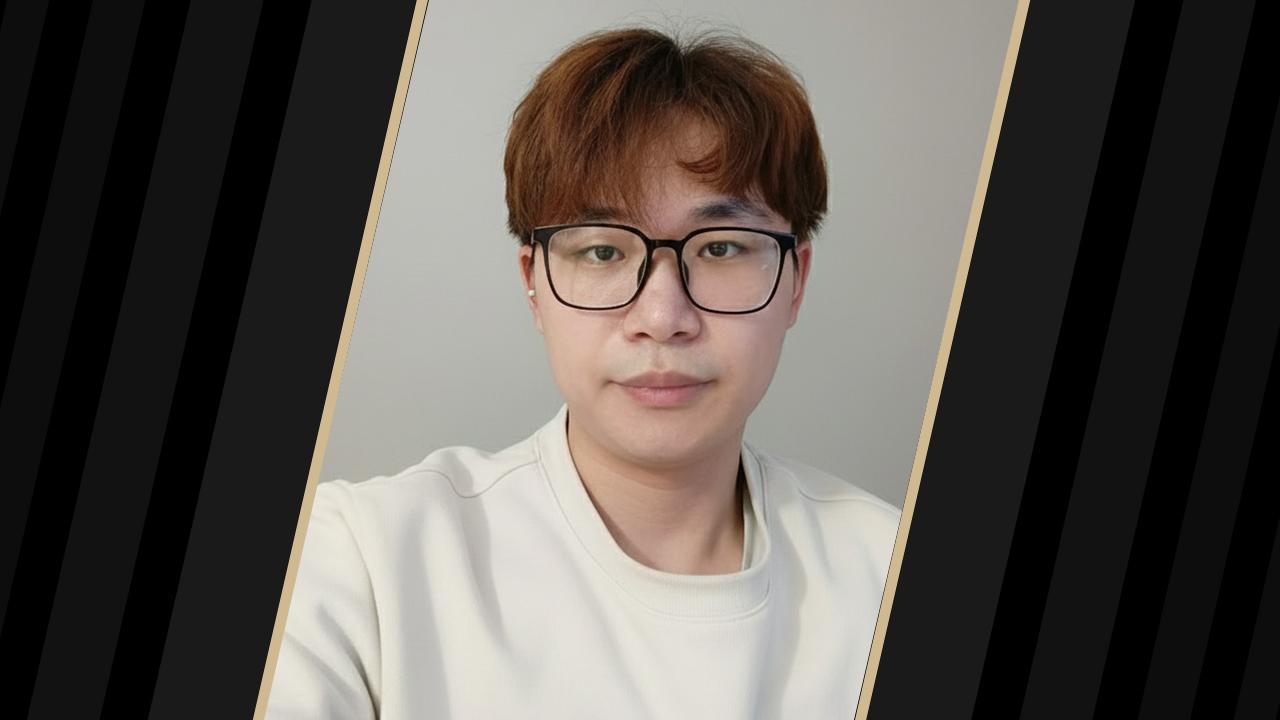
Wei Wu, a Ph.D. student in Purdue Polytechnic’s School of Construction Management Technology, has recently been recognized by two different institutions for his innovative conceptual research that explores how AI-enhanced 3D reconstruction and immersive visualization can support the resilience of coastal communities.
Wei was awarded the Best Paper Award at the 2025 IEEE 4th International Conference on Intelligent Reality (ICIR), held at Northeastern University in Boston. Additionally, he was named an Illinois-Indiana Sea Grant Graduate Student Scholar for the 2025-2026 academic year.
His research, titled "AI-enhanced Rapid 3D Coastal Reconstruction with Immersive Visualization for Resilient Communities," introduces a conceptual framework that explores how UAV imagery, satellite observations, and advanced transformer-based vision foundation models (including VGGT, MASt3R, etc.) can be integrated to produce more comprehensive and detailed 3D representations of coastal environments.
Rather than presenting a fully implemented system, Wei’s research offers a methodological blueprint for how the integration method could improve shoreline monitoring workflows and support early warning systems and planning strategies.
"The innovative conceptual method is that I’ve combined UAV-based and satellite images with state-of-the-art 3D Reconstruction models," Wei said. These integrations have the potential to offer more well-rounded and comprehensiveinputs for high-fidelity coastal terrain 3D reconstruction, which planners and stakeholders could interact with through immersive visualization tools."
This technology is designed to aid a wide range of stakeholders—from policymakers and urban planners to emergency responders—by providing near-real-time insights into coastal conditions. By using virtual reality (VR) and mixed reality (MR) headsets, these stakeholders can interact with the 3D reconstruction models to inspect specific erosion patterns and infrastructure vulnerabilities in an intuitive, spatially accurate environment.
"It can shorten distances between people," Wei explained regarding the collaborative potential of the technology. "It can help researchers, scientists, and planners to respond and make decisions in emergencies. And this is all aimed at community emergencies and long-term resilience efforts."
Wei’s work is particularly relevant to the Great Lakes region. As a Sea Grant Scholar, he plans to conduct on-site fieldwork at Lake Michigan in the spring of 2026. The objective is to incorporate recent state-of-the-art techniques within his integration framework, thereby demonstrating that the framework offers optimal trade-offs between accuracy and computational efficiency, ensuring practical utility for decision-makers.
In the long term, Wei’s research seeks to open up new pathways to ensure that coastal infrastructure and communities remain resilient and better understand and prepare in the face of changing water levels and weather patterns.
Additional information