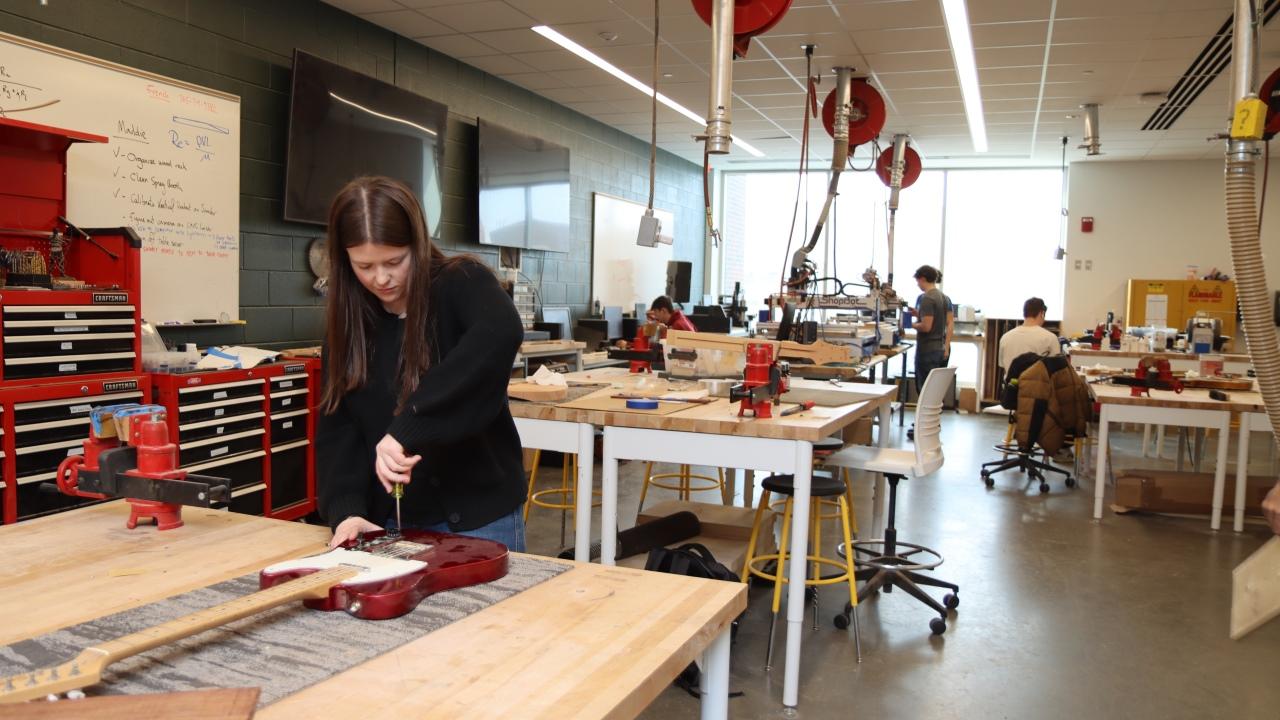
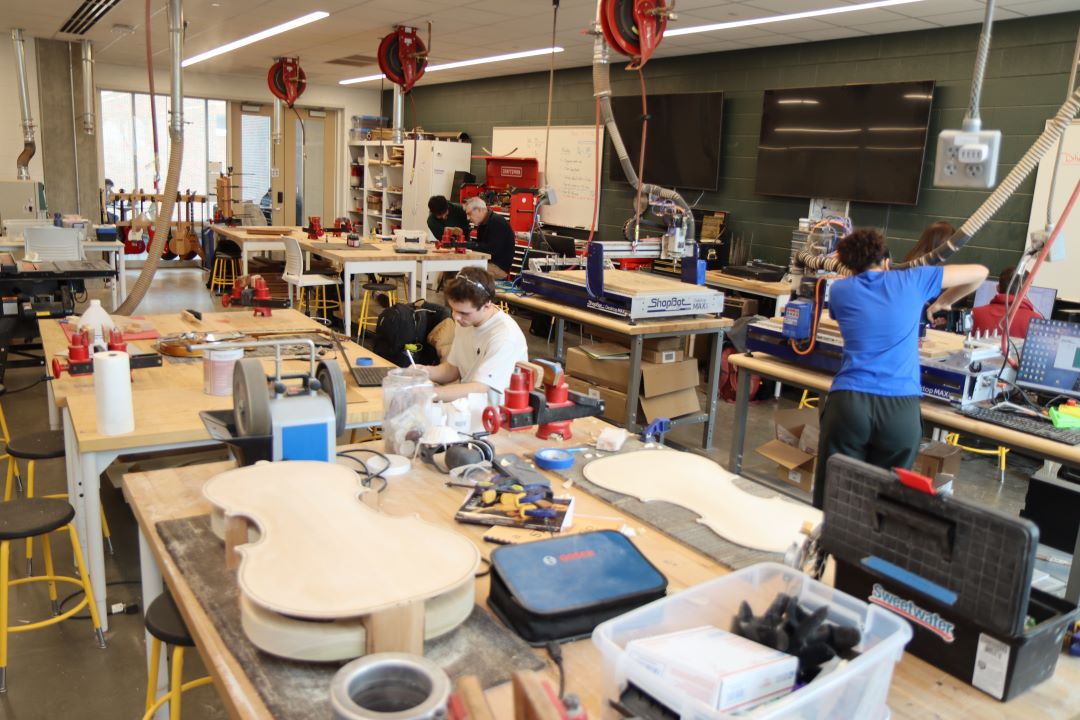
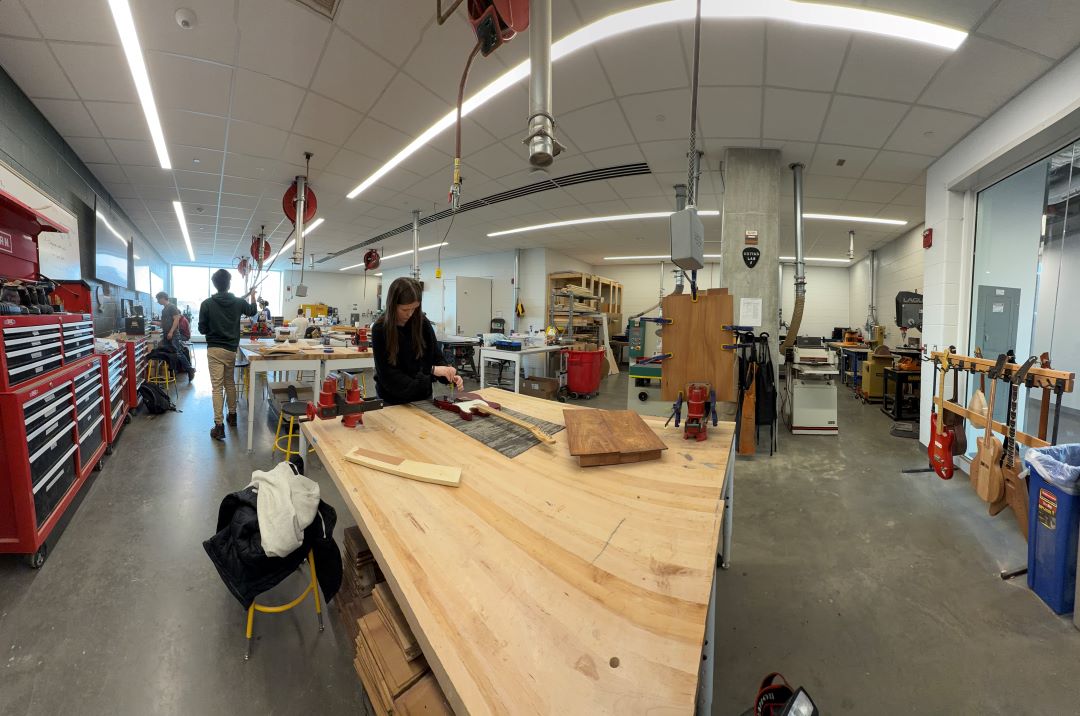
In Lambertus Hall, CNC routers hum away in a Purdue Polytechnic lab. This one lab has a mile-long waitlist, and every semester students from all imaginable disciplines clamor to get in. Almost two decades ago, this same lab course was taught in a small, artificially-lit room in the basement of Michael Golden Labs (MGL)-the building, one of the oldest on campus, that was replaced by Dudley and Lambertus Halls. How did this course grow so much over the years, and what continues to draw so many students to it?
For 18 years (and across many moves), this course was taught out of a space formally designated the Wood Fabrication Lab. But to the thousands of students who have passed through its doors, it has always been, simply, the “Guitar Lab.” Now, the name has been officially updated to reflect its identity as the home of one of Purdue University's most popular and unique educational experiences.
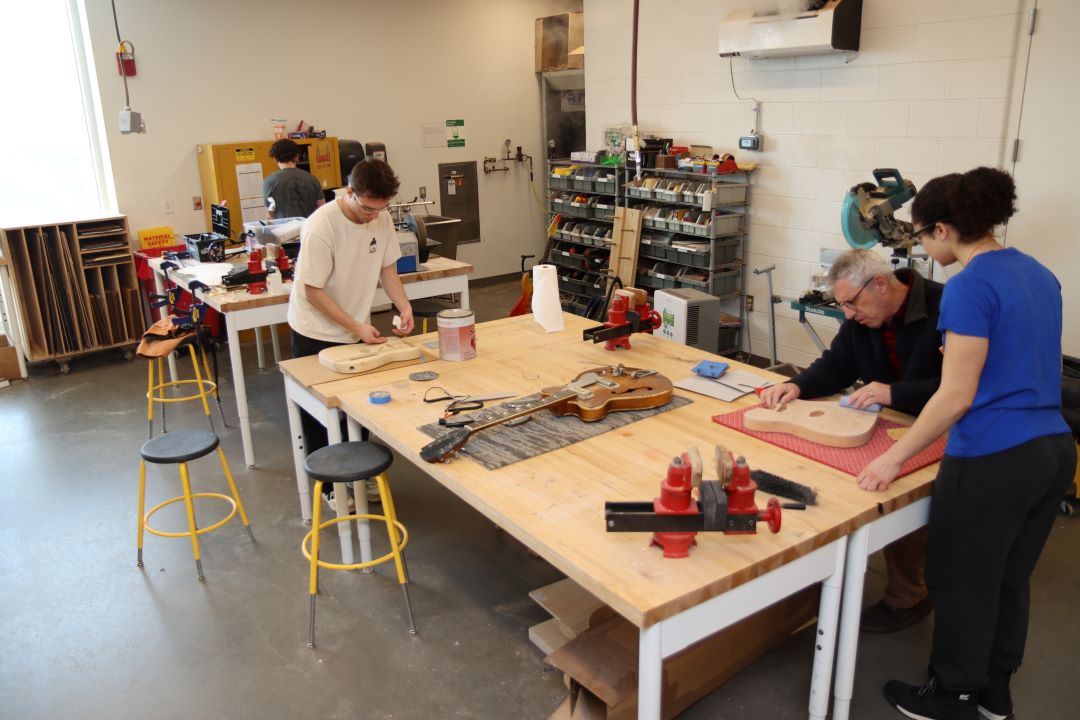
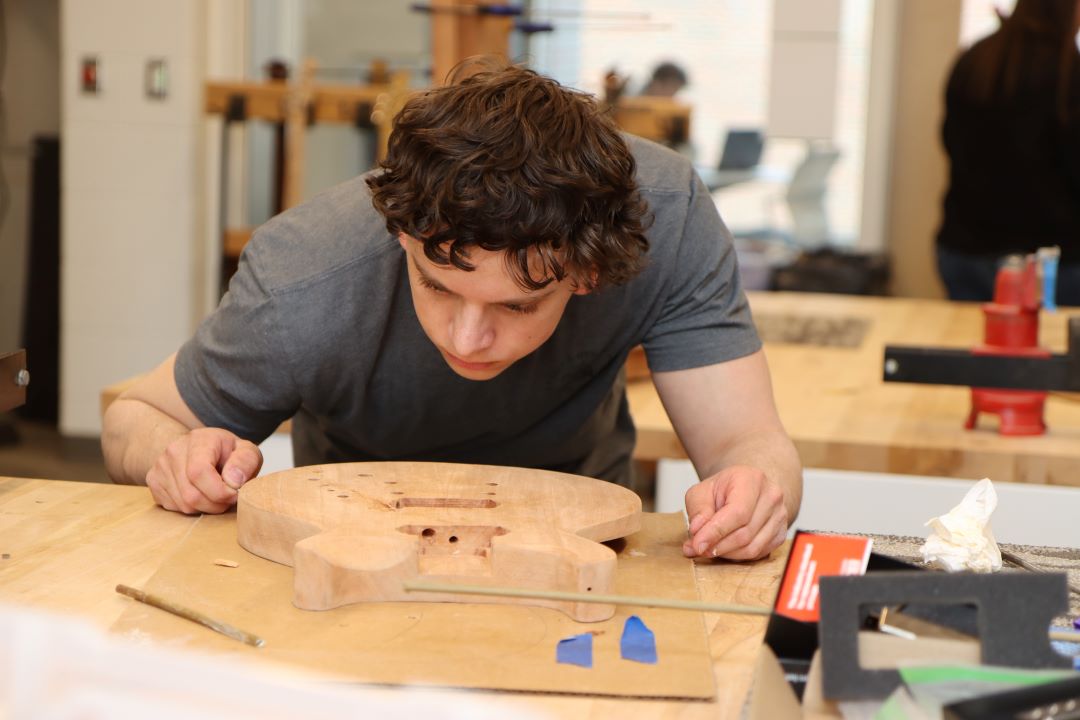
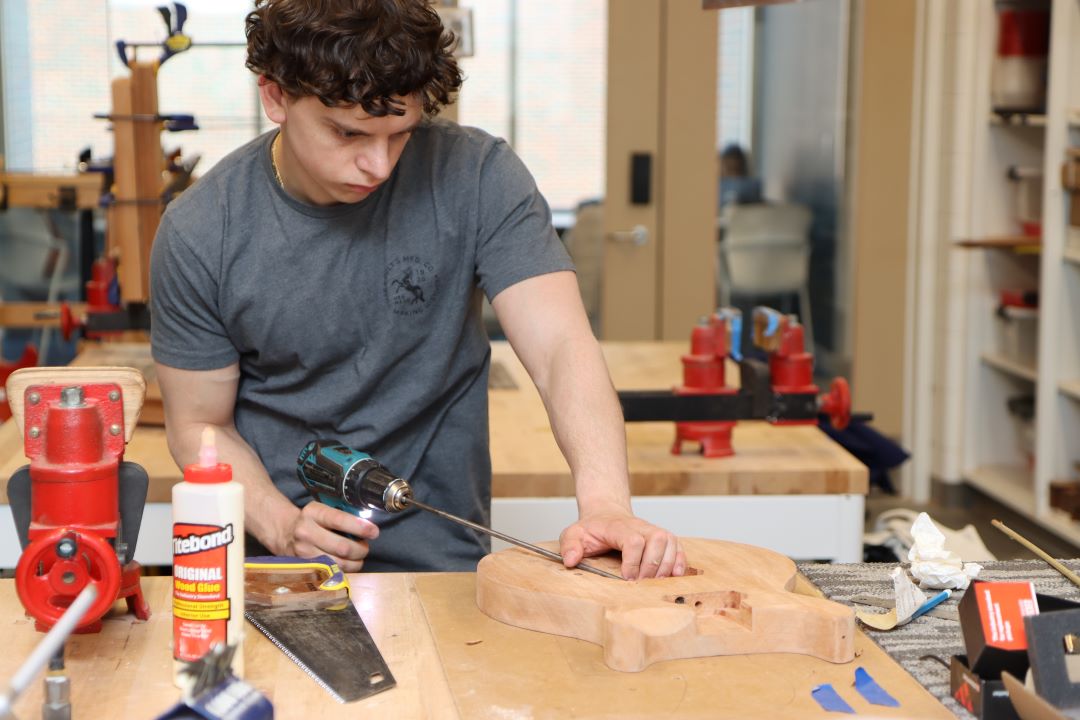
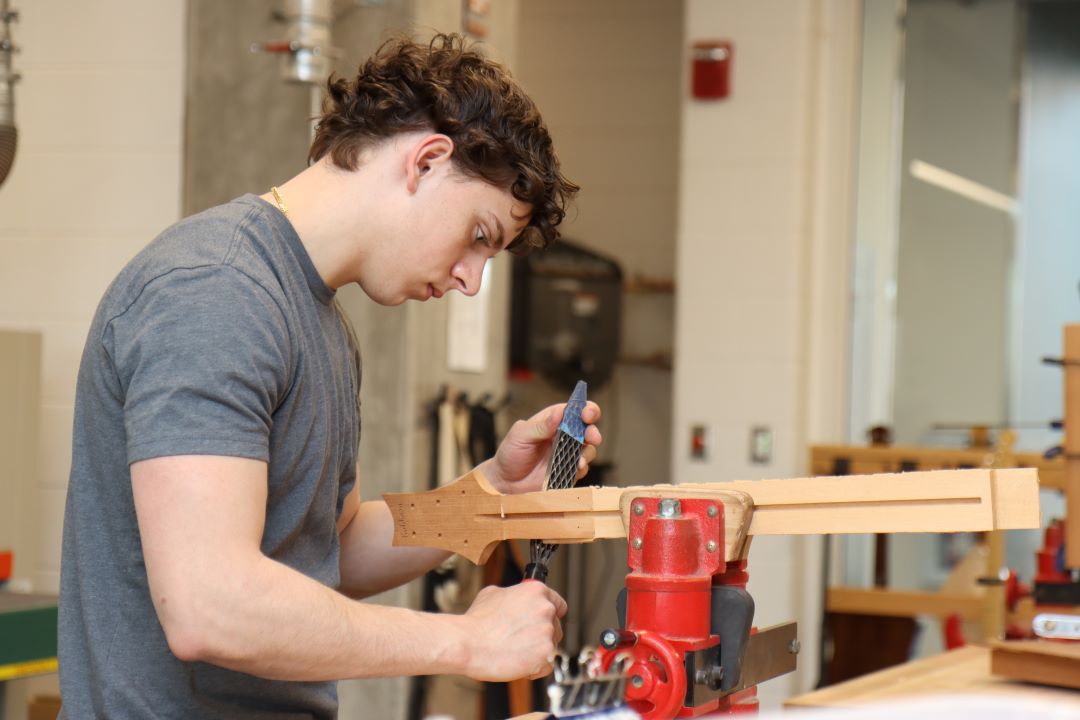
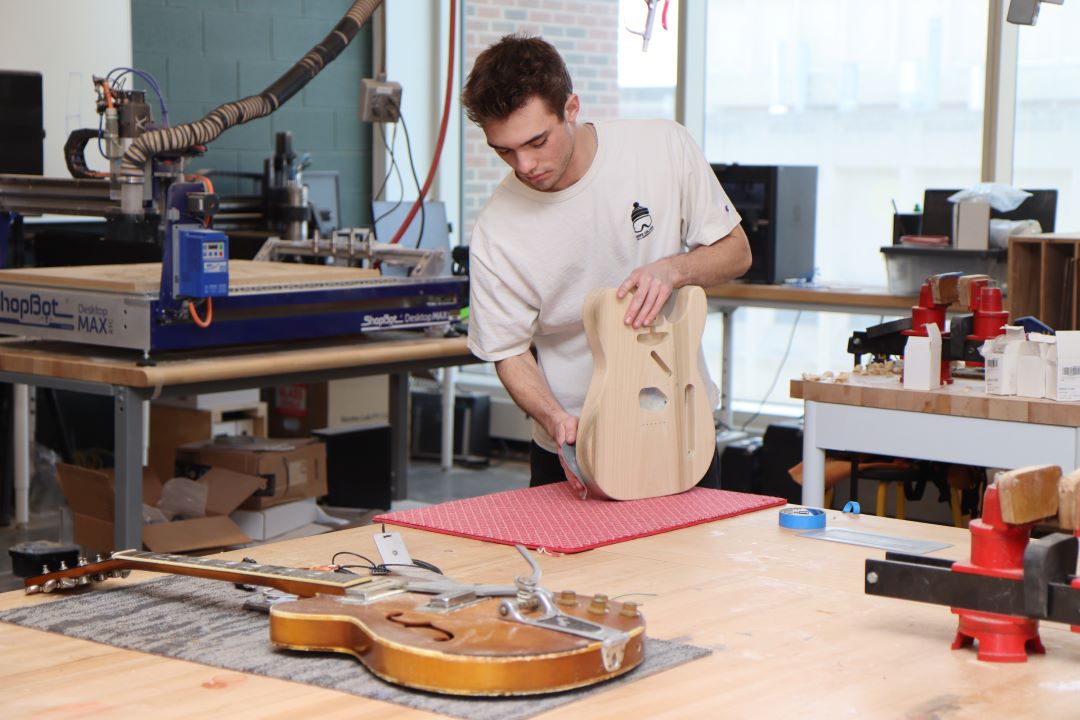
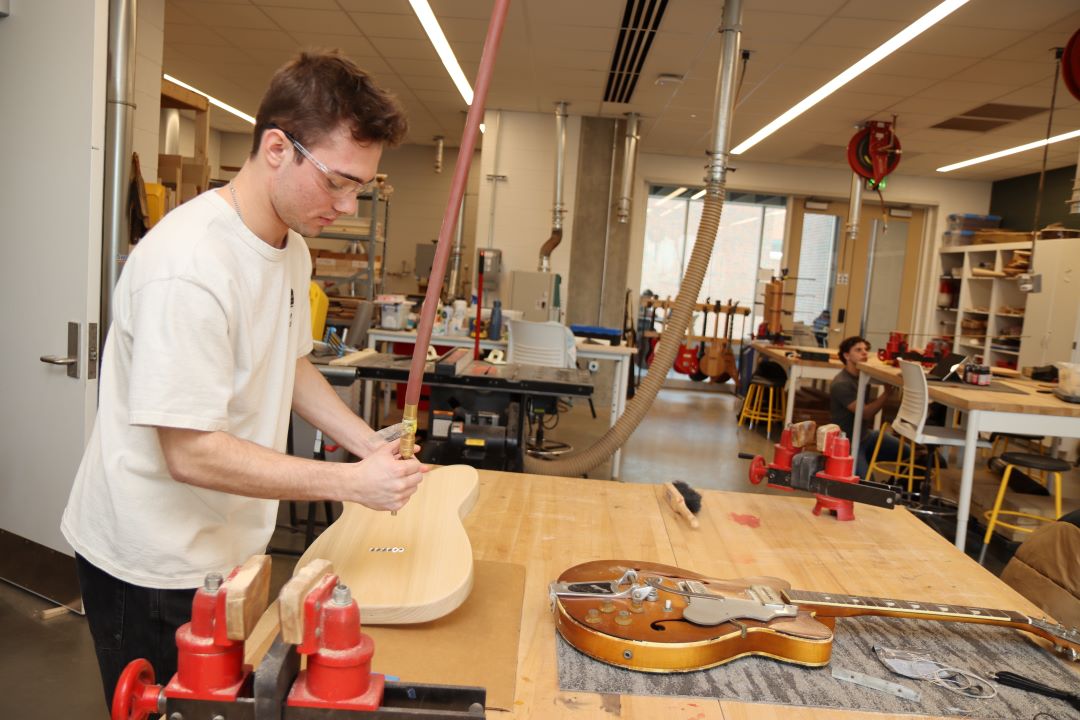
The Guitar Lab is the headquarters for MET 349: "Stringed Instrument Design and Manufacture." MET 349 has a simple premise. Students spend a term designing and building their own electric guitar, with the goal of having a finished product by the end of the semester. But as anyone who manufactures complex products knows, it's not that simple.
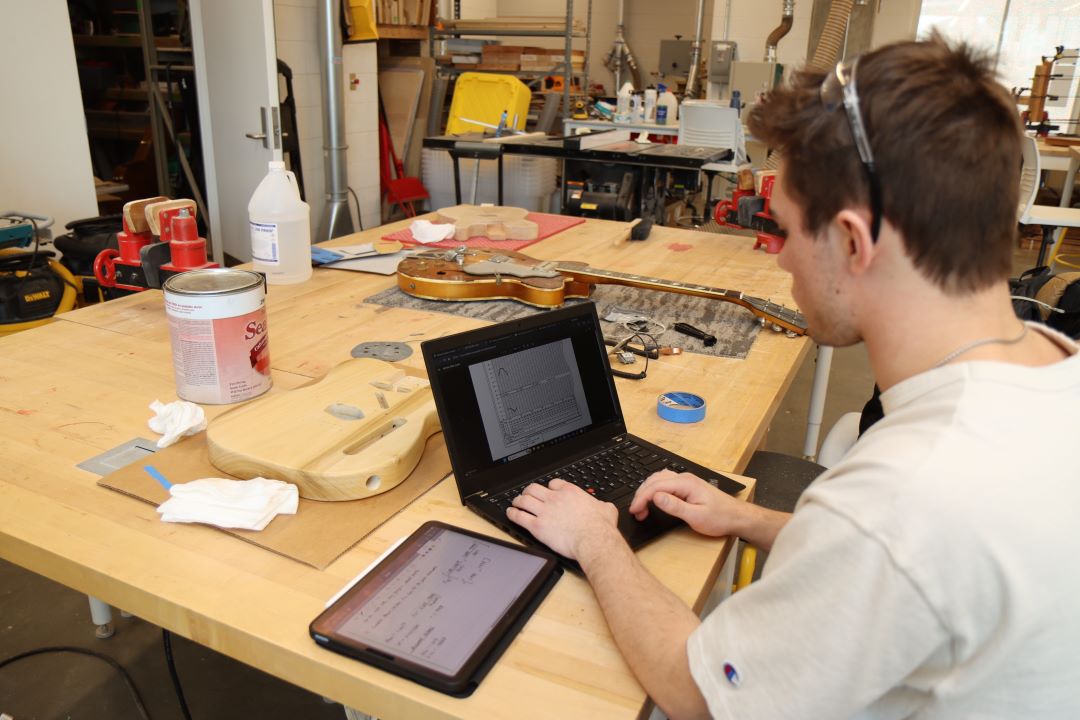
For students to end up with a functional instrument, they need to develop a lot of knowledge—not just the hands-on experience and dexterity to machine parts out of wood, but an understanding of advanced manufacturing strategies, supply chain management, budgeting and product design.
A lab for all of Purdue
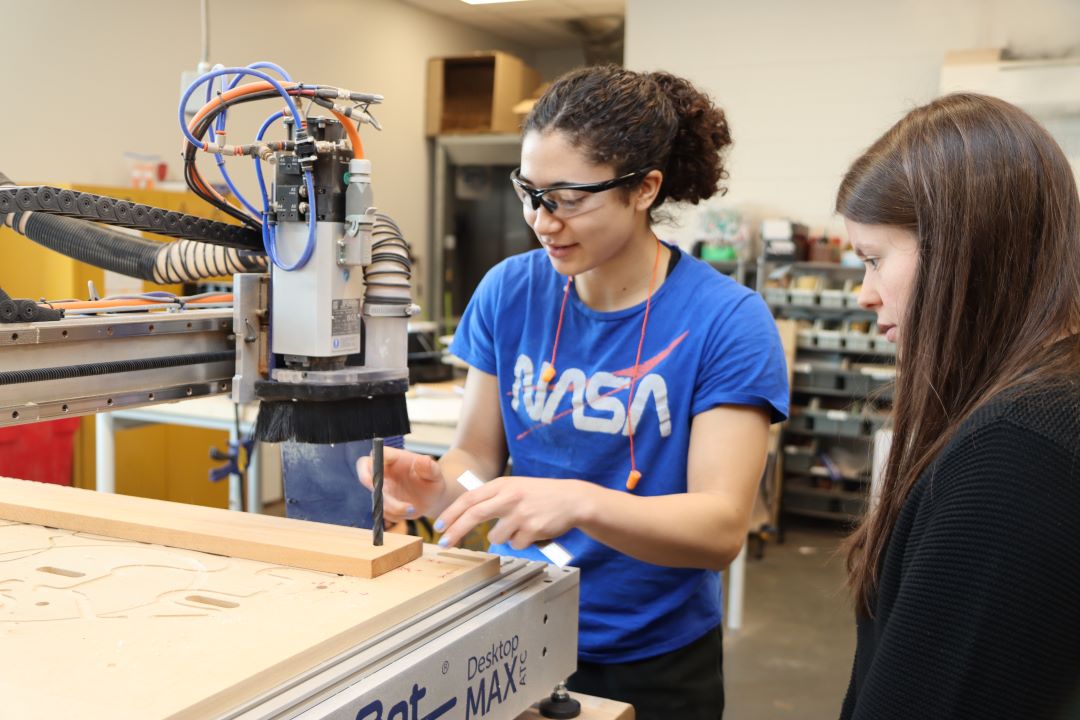
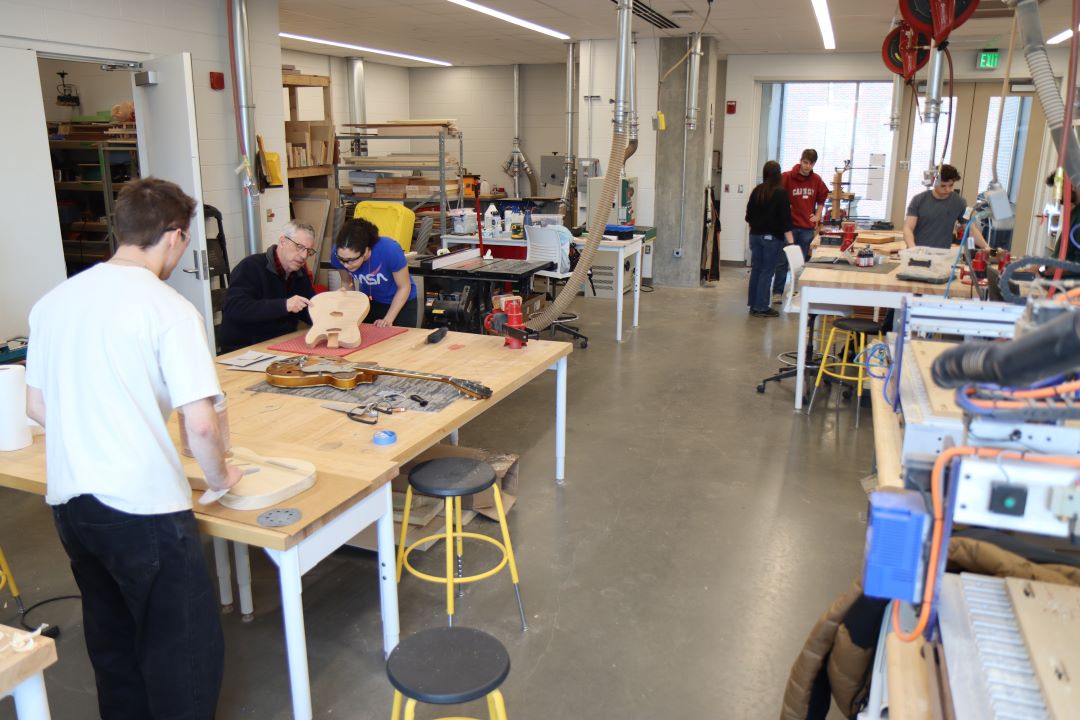
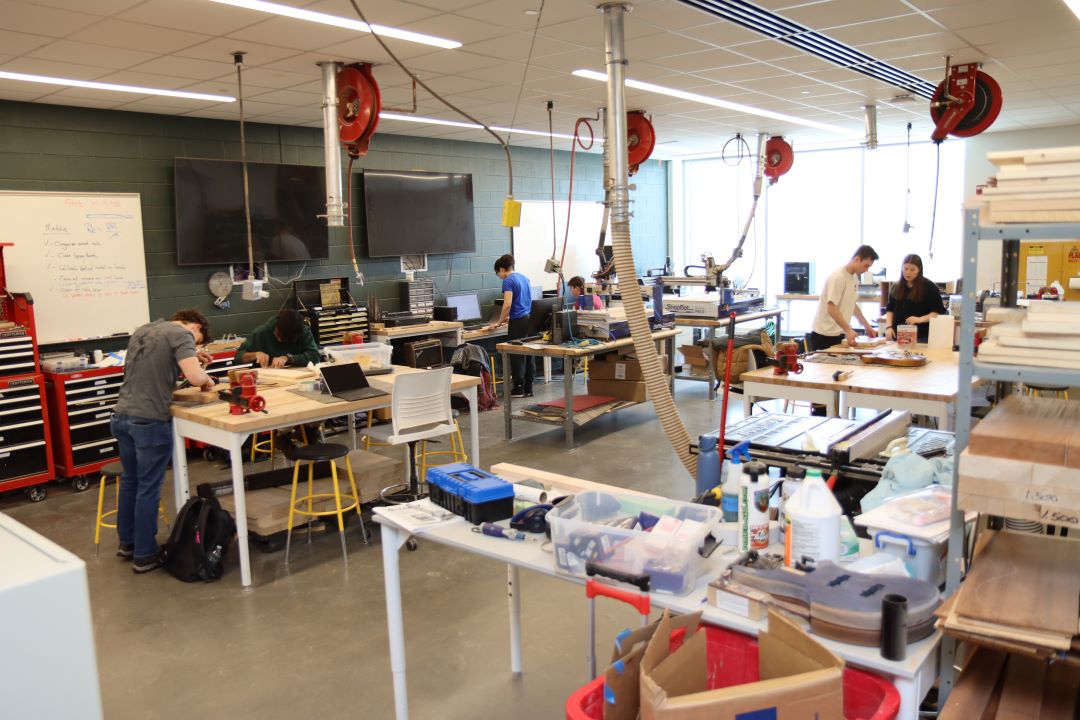
While the Guitar Lab is housed within Purdue Polytechnic's School of Engineering Technology (SoET), its influence has spread across campus in recent years. The course has become a magnet for students across the entire Purdue ecosystem, drawing majors from engineering, liberal arts, business and science.
For a number of years, it also housed an audio speaker making class taught by a colleague, Davin Huston, in the ECET program. They decided to call it the Wood Fabrication Lab to reflect its varied roles within the School of Engineering Technology. Several years ago, Huston moved on to a job in the construction engineering industry, so the lab returned to its roots as the Guitar Lab.
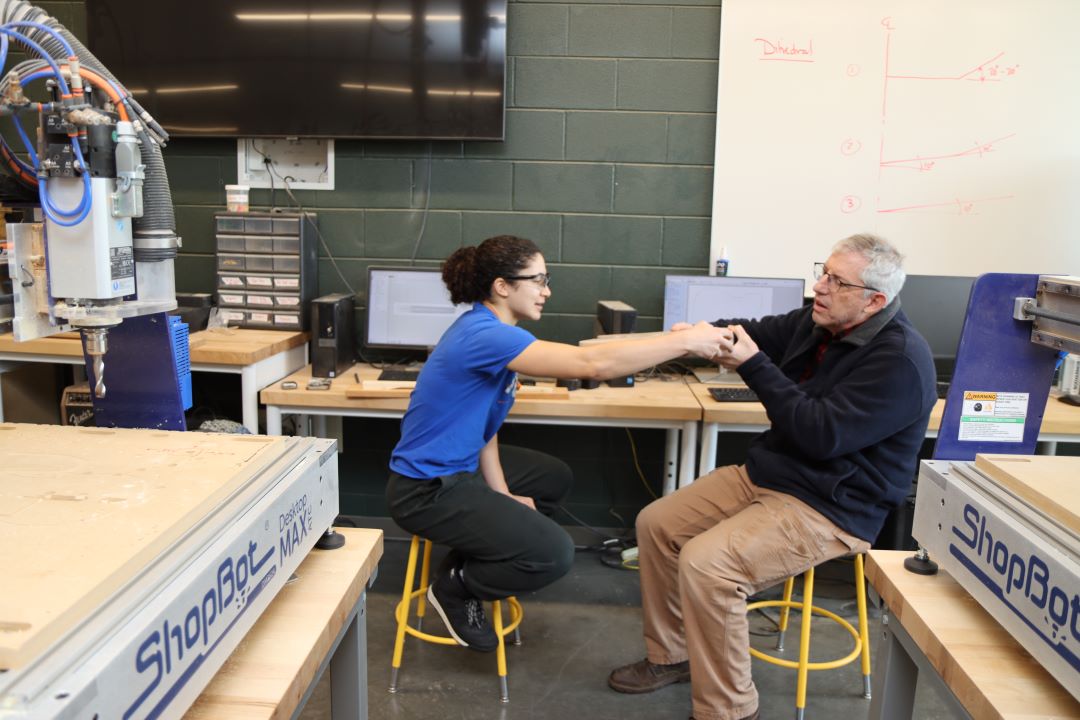
"I'm a huge fan of getting as many different ways of thinking in the room as I can," said Mark French, a professor of mechanical engineering technology who has run the lab throughout its existence. "If the group is academically diverse, the whole process works better. They approach problems from different directions than I'd normally see."
Since the course seems to work so well for students with unorthodox backgrounds, demand is high. Students often wait semesters for a spot in the class, drawn by the rare opportunity to design and build a functional product from start to finish in a single 16-week term. For many, it is the first time they have ever manufactured anything with their own hands.
Innovation by design
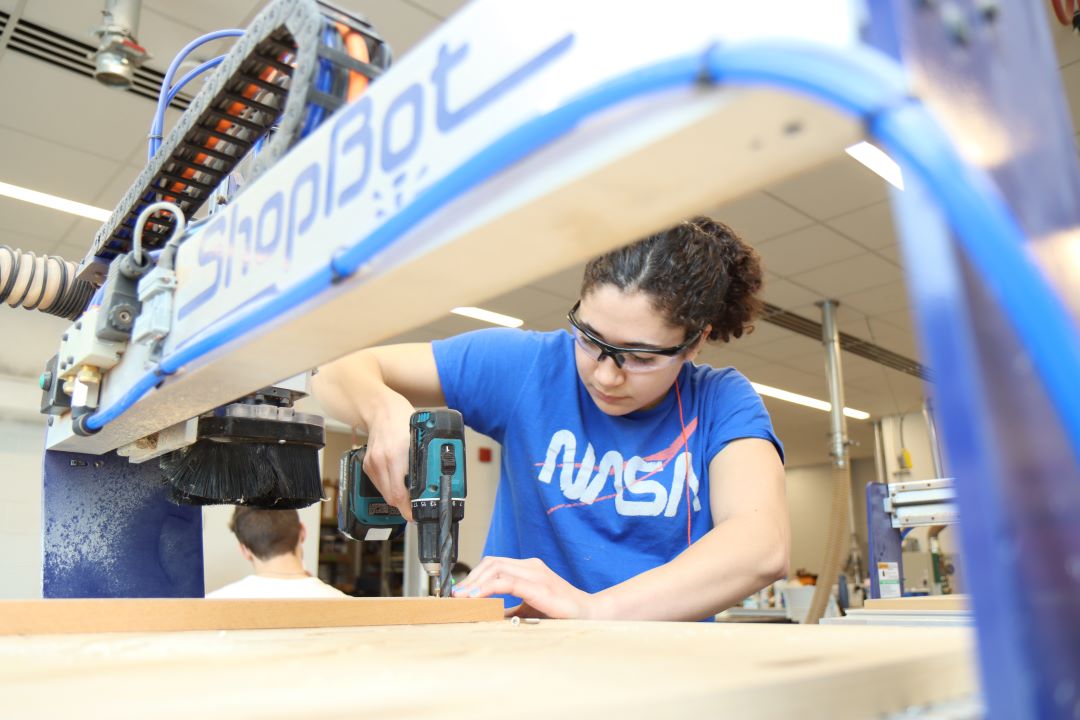
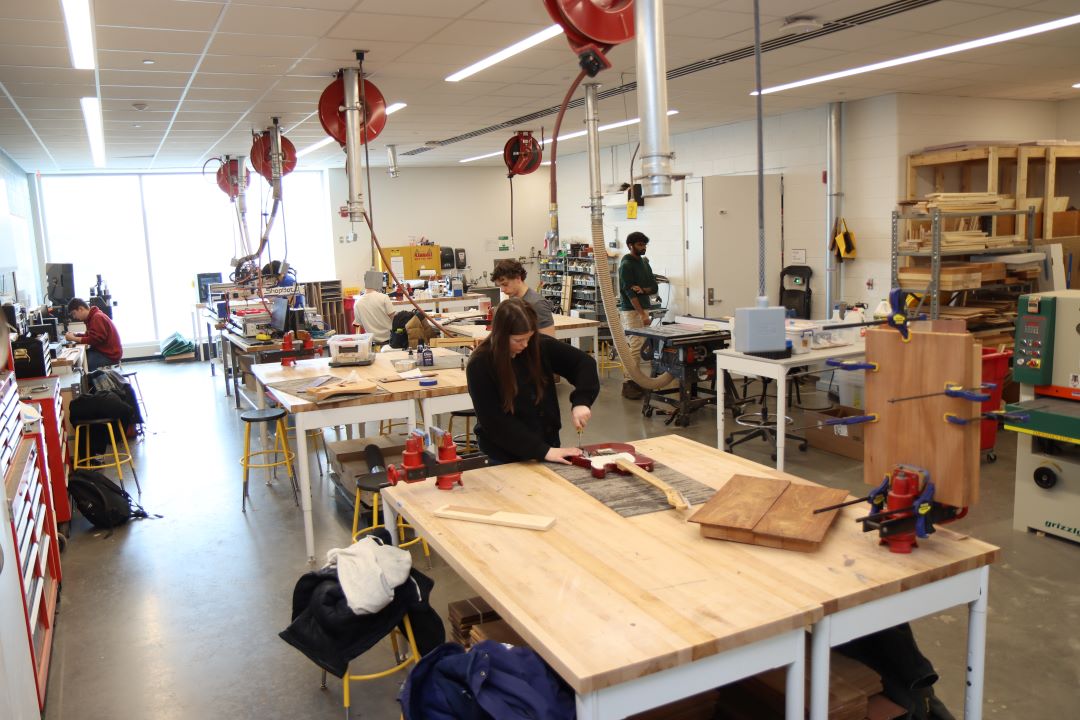
The Guitar Lab is not a traditional woodshop. The current Guitar Lab setup is a modern manufacturing space that includes four CNC routers, a CNC laser, an industrial-sized belt sander, other stationary tools and a collection of specialized hand tools specifically for making instruments.
This professional-grade environment allows students to tackle complex projects. As a result, the lab even supports coursework in aerospace technology where students design and test radio-controlled airplanes. During open hours, the space becomes a hub for personal creativity, with students crafting everything from custom furniture to violins and cellos.
The lab's capabilities have attracted attention from the highest levels of industry. In 2023, Gibson, the world's leading guitar brand, established a first-of-its-kind partnership with the lab. Gibson provides support, materials, and instruments, recognizing the lab as a pipeline for future engineers who understand the intersection of craftsmanship and mass production.
The long road
The Guitar Lab didn't start out this way. French says that when it began in the basement of MGL around 2005, “it was [in] a converted storage space” that students had affectionately dubbed “the Catacombs.” French enlisted his then small children for help when he initially had to set up that space.
“They insisted on a written contract, [which] stated that no one would be asked to lift more than twenty percent of their body weight and that they [would] be given ten-minute breaks every hour. After two hours of honest work, they were to be taken to the Discount Den, where Dad was to get each of them a candy bar.”
The lab eventually moved to a larger space in the MGL basement, but like the prior space in the Catacombs it had few electrical outlets. “We were still blowing fuses,” French said, “but eventually we were able to rewire the lab. … The students caught a mouse [living] in one of the power supplies. They named him George and made a nice enclosure for him. He was the lab mouse for a while.”
During MGL's demolition in 2021, the lab moved to a temporary site before settling in to its current space in Lambertus Hall. “[That space] was designed from the beginning to be the Guitar Lab,” French said. “As far as I know, it's the only one of its kind in the country.”
Real-world impact
No matter which iteration of the Guitar Lab students attended, MET 349 has made its mark on them. The skills learned in the Guitar Lab translate directly to career success. “Four of my former students now work at guitar manufacturers-two at Gibson in Nashville and two at Taylor in California,” French said. “I'm pleased to report that they are all thriving.”
Lyndsay Moye, an alumna who is now a CNC engineer at Gibson in Nashville, credits the lab with launching her career.
"I wouldn't have this job without Professor French," Moye said. "The project taught me a lot of the terminologies that I'm using all the time now."
Students also play a vital role in the lab's ecosystem. Gryphon Mawhorter, an audio engineering technology alumnus who now also works at Gibson, served as a lab supervisor when he was a student, where he helped peers troubleshoot their builds while crafting his own custom instruments. His work, including a guitar made from the reclaimed floor of Mackey Arena that auctioned for nearly $11,000, highlights the high level of craftsmanship the lab enables.
Most recently, the lab's reputation for excellence led to a high-profile commission from the Indianapolis Colts. French and alumnus Noah Scott utilized the lab's resources to build a custom tribute guitar honoring late owner Jim Irsay, which has been featured before Colts games throughout the 2025 season. This was followed by one made for Monday Night Football on ESPN that Noah played on air.
Supporting the vision
As the Guitar Lab continues to grow in popularity and scope, it relies on support to maintain its equipment and provide materials for students. The lab offers a unique hands-on experience that textbooks cannot replicate, fostering a community of makers who are industry ready, day one. Supporters can now donate to the Guitar Lab through the Purdue for Life Foundation.
Additional information