

When Congyu Zhao's flight to Chicago was delayed, he missed the last shuttle back to Purdue. It was late, and finding a ride to West Lafayette was difficult. After waiting about an hour, Zhao found an Uber driver willing to make the trip. The ride cost nearly $300.
Later, Zhao learned that another Purdue student had been in Chicago at almost the same time.
“I do not know whether that person would have been able to give me a ride, but I never even had the chance to ask because I did not know them and had no way of knowing they were there,” Zhao said. “Sometimes the person or resource that could help you is already nearby, but the information never reaches you.”
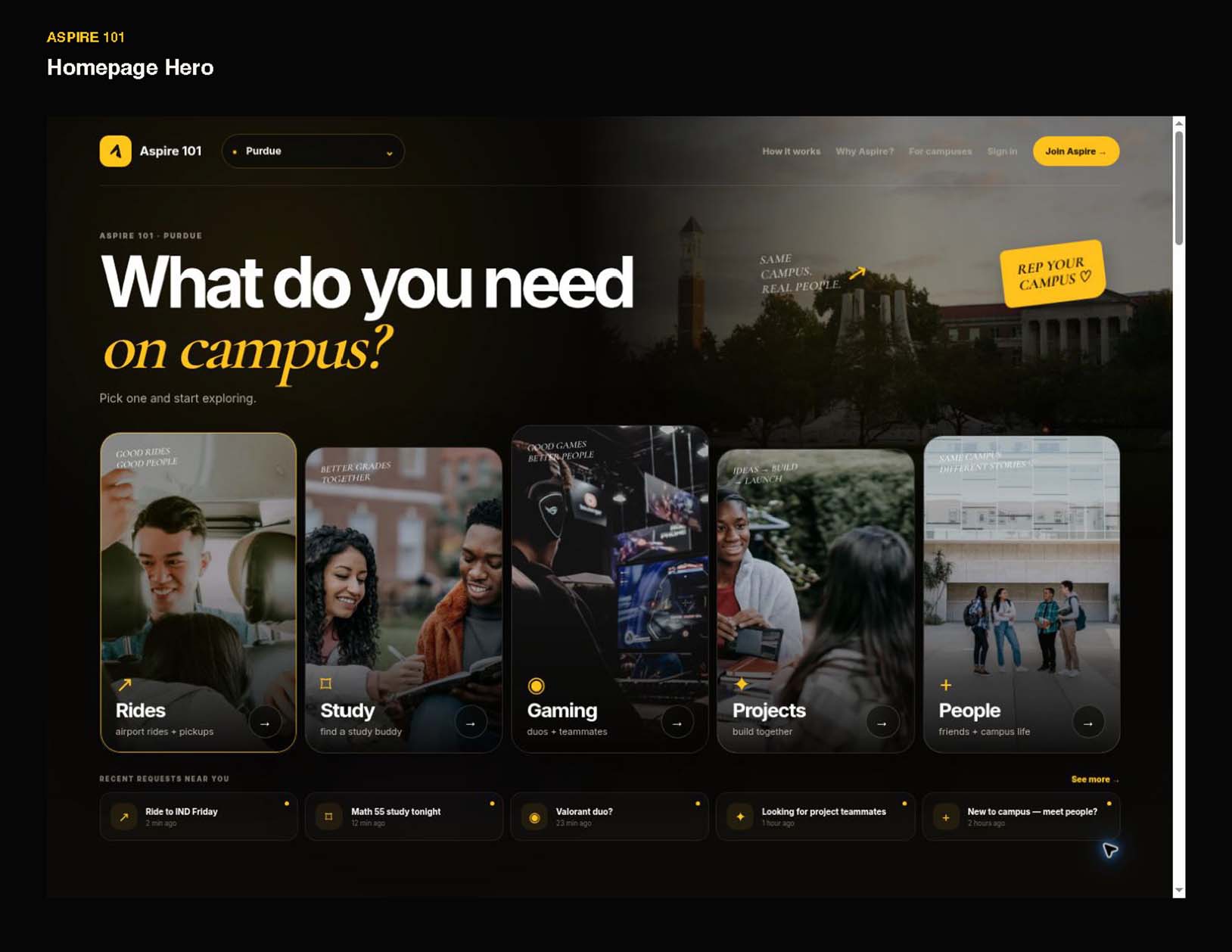
That experience led Zhao, a Purdue Polytechnic Game Development student with a management minor, to create Aspire 101, an early-stage student-to-student platform designed to help members of a campus community find people, resources and support beyond their immediate circles.
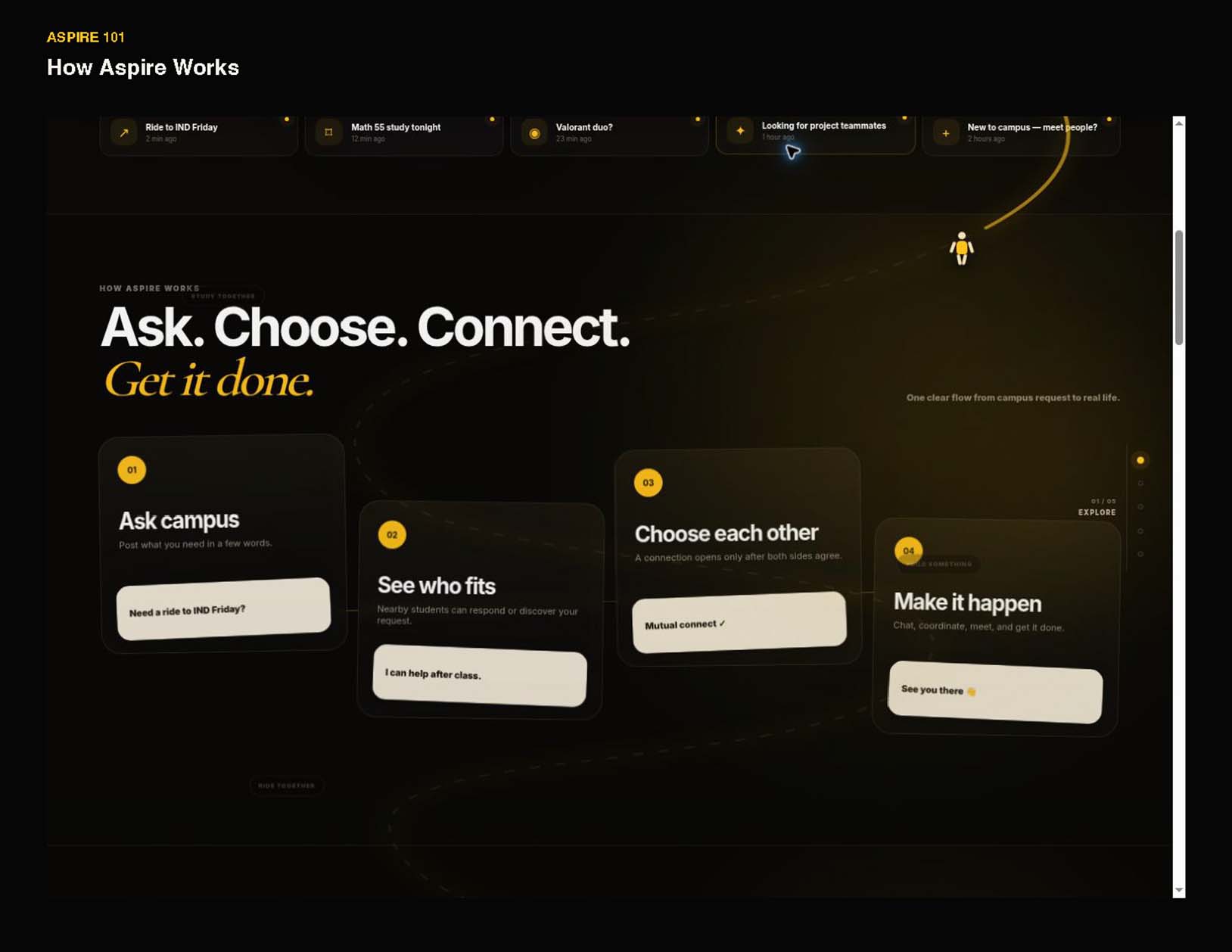
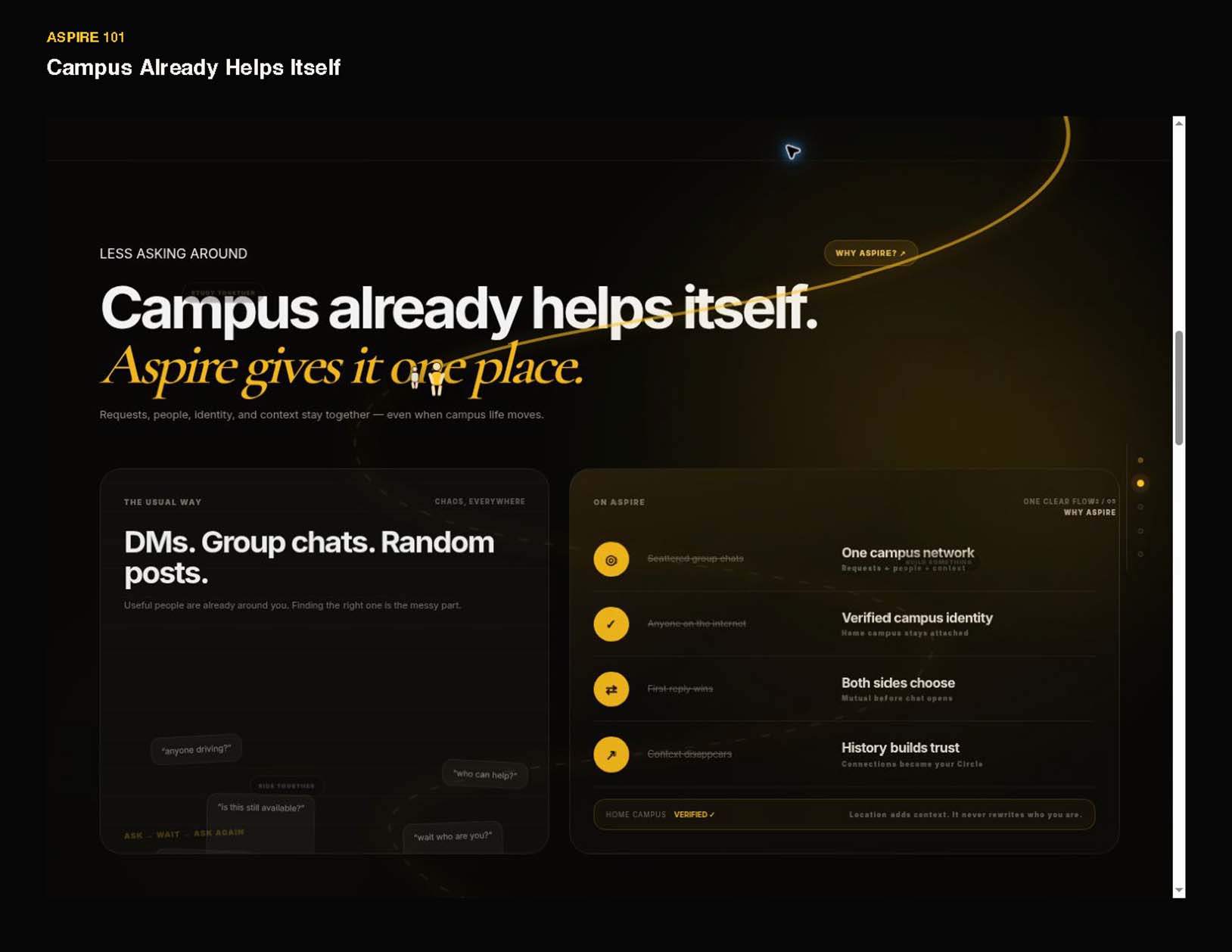
Zhao sees Aspire 101 as different from a group chat or traditional social media feed. Rather than asking students to sort through posts or rely on a friend of a friend, the platform is designed around a specific need. A student might use it to look for an item, help with a task, a local service, delivery assistance or someone with relevant experience or availability.
“The point is not just to post something for people to scroll past,” Zhao said. “It is to help a student accomplish something.”
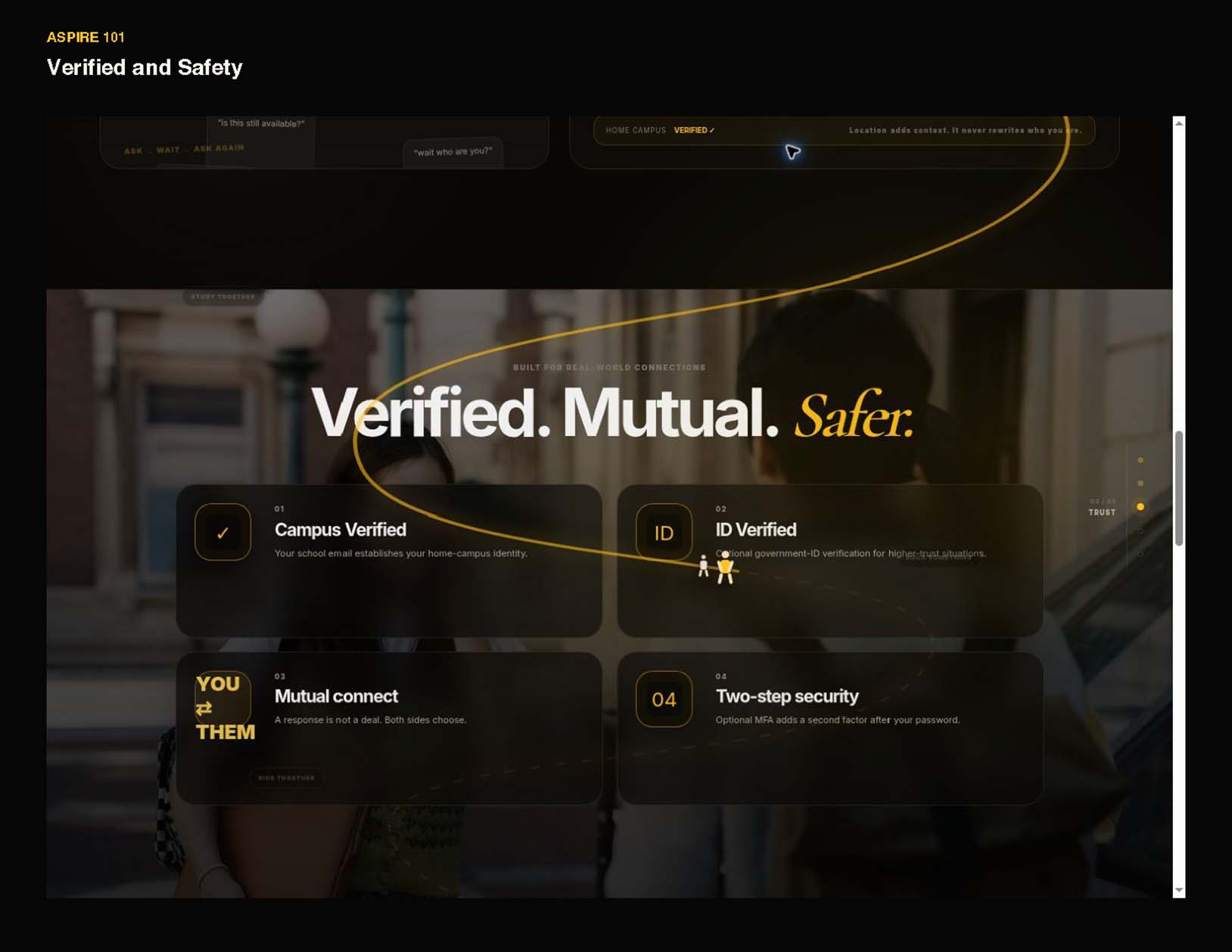
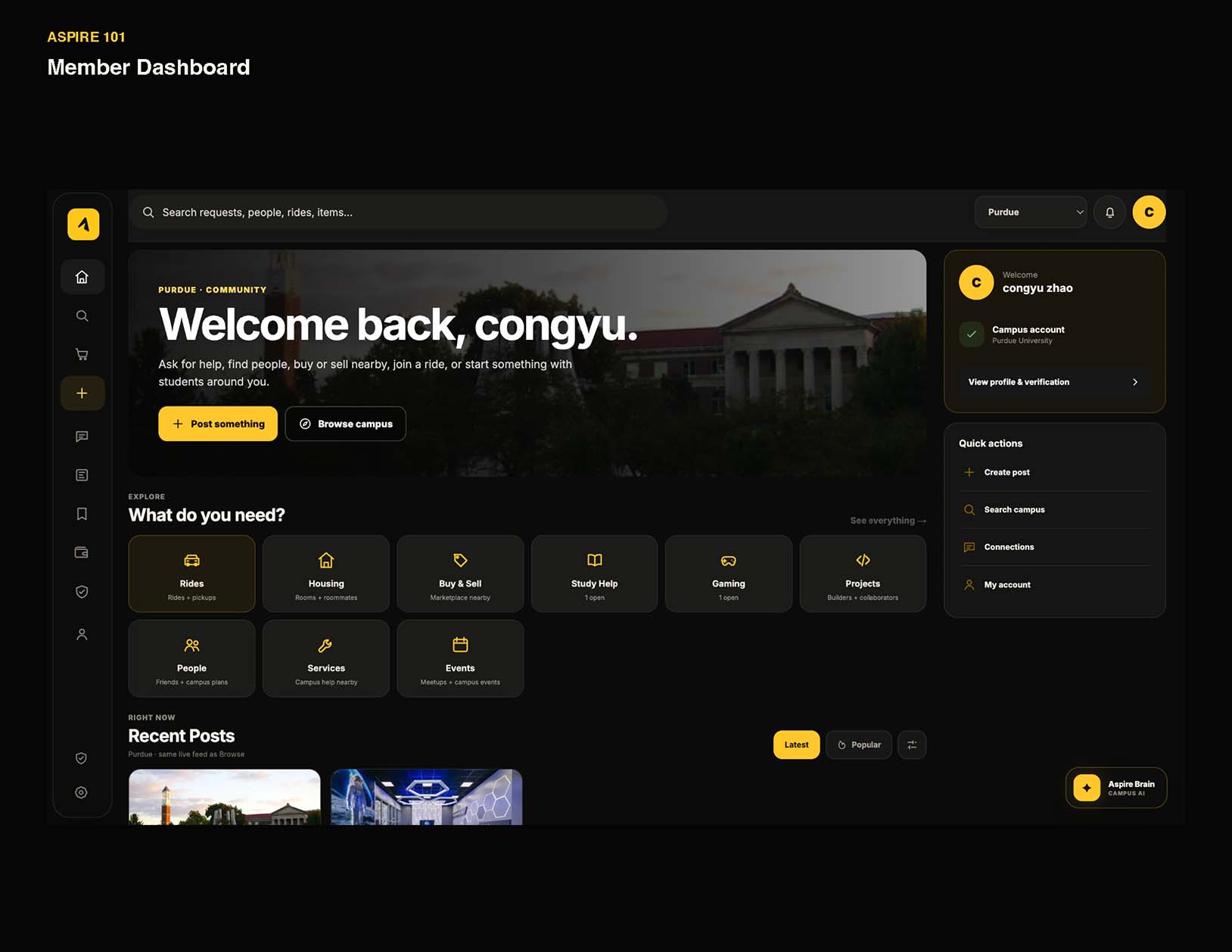
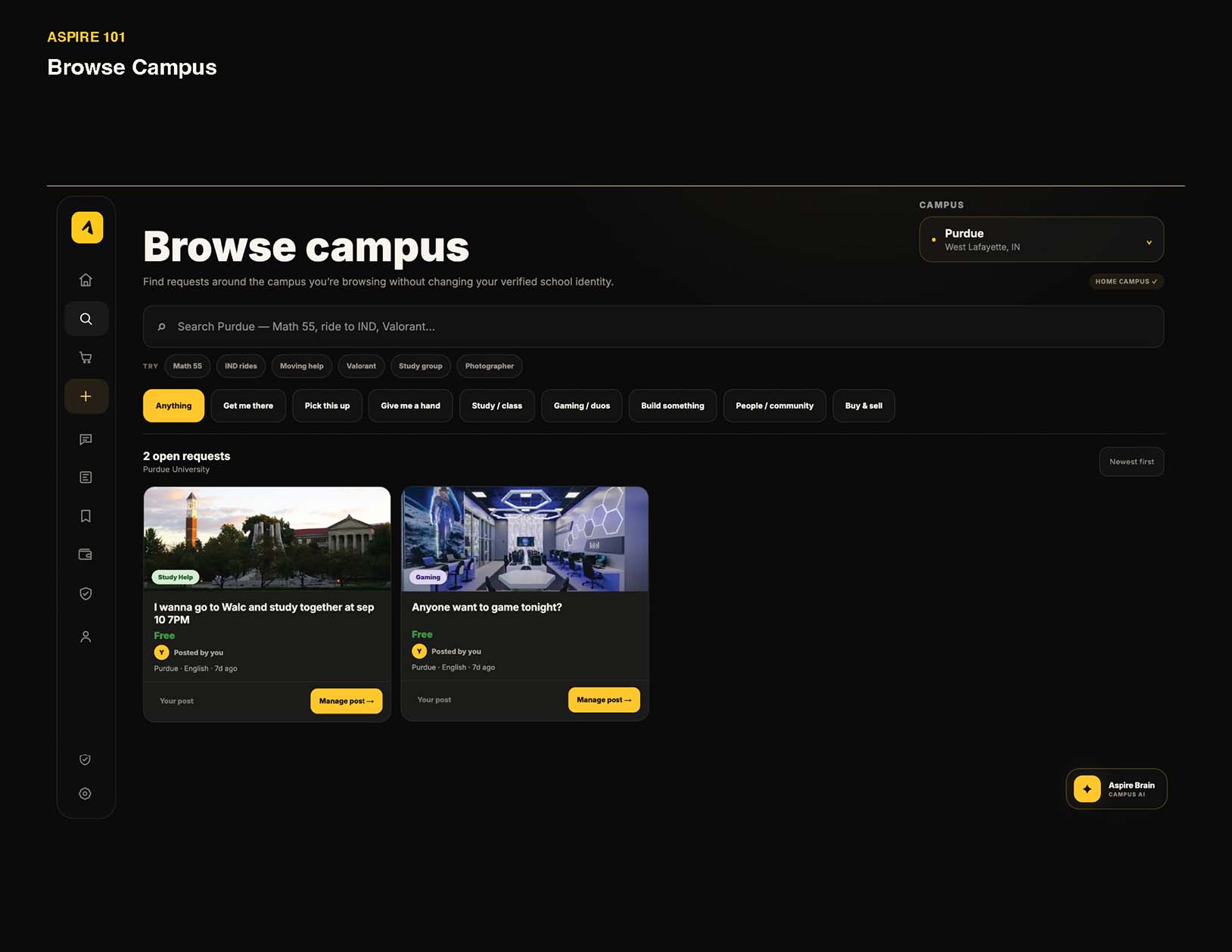
The idea reflects Zhao's own experience arriving at Purdue from California and learning to navigate a new campus and community. He became involved in Purdue Student Government, Purdue University Chinese Students and Scholars Association, Purdue Student Union Board and the Student Fee Advisory Board, where he saw the many ways students create communities and support systems.
“I do not want Aspire 101 to replace those communities,” Zhao said. “I want it to help bridge the gaps between them, especially for a student who has not found their circle yet or whose immediate need falls outside the people they already know.”
Zhao has led much of the platform's early development, including product planning, user flows, interface design, website development, testing, payments and fulfillment, safety considerations, moderation and outreach. The process has also taught him that building a product means preparing for problems that users may never see.
A wave of spam and abuse disrupted work on the platform for nearly two months. The setback required Zhao to rethink moderation, prevention and recovery, not simply add new features.
“It forced me to learn things I probably would not have prioritized otherwise,” Zhao said. “Creating a real product is not only about building the features you want users to see. You also have to think about misuse, prevention, moderation, recovery, reliability and situations you did not anticipate.”
His Purdue Polytechnic coursework has helped shape that approach. Through game development, Zhao has learned to prototype, test, collaborate and consider the experience of the person using what he creates. His management minor has added another perspective, helping him think about users, communication, operations and how a project could grow beyond an initial prototype.
Zhao plans to begin by introducing Aspire 101 to Purdue students and learning from their feedback. He hopes to continue improving the platform here before eventually bringing it to other campuses.
“I built Aspire 101 because I have been the student who was stranded late at night at the Chicago airport, and I have also been the student who was new to Purdue and accidentally ended up at Walmart when I was trying to get to class,” Zhao said. “If Aspire 101 can make it more normal to ask for help, make it easier to find the right person and help students support one another, then I think it can become something meaningful for a campus community.”
Additional Information