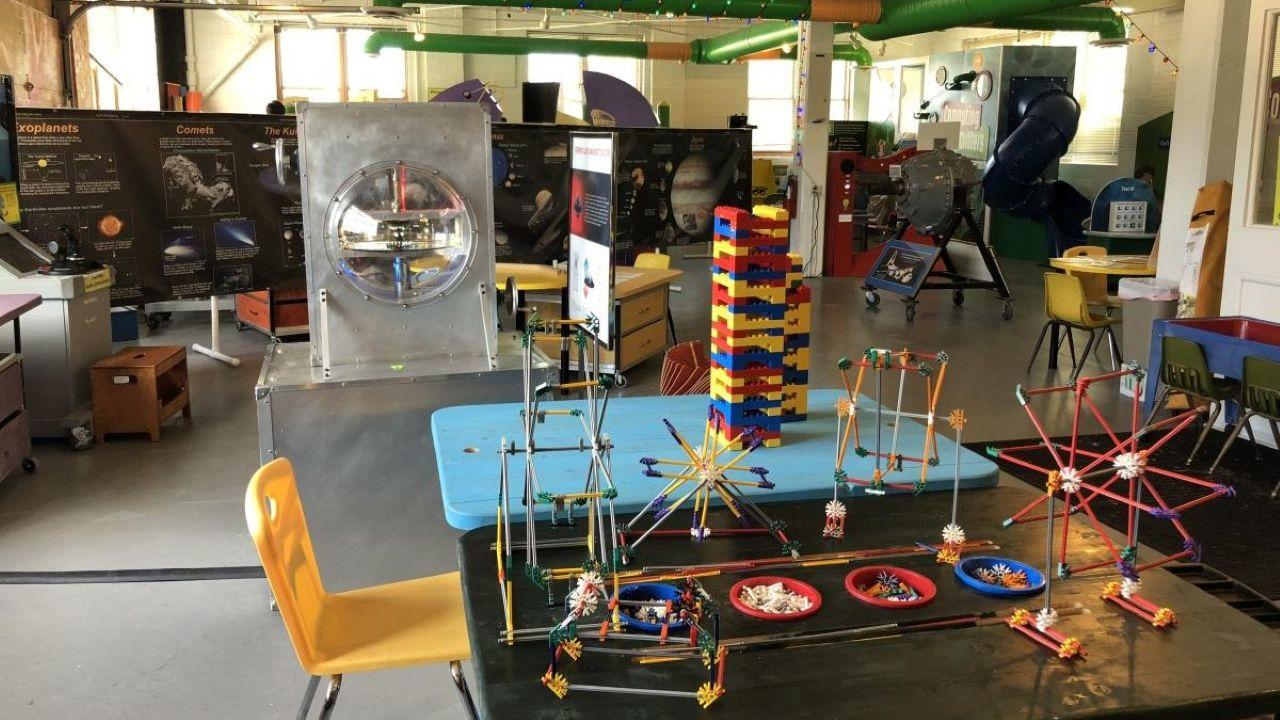
Rua M. Williams, an assistant professor in Purdue Polytechnic's School of Applied and Creative Computing (ACC), is hosting a free robotics summer camp for autistic youth at the Imagination Station in Lafayette.
The camp runs from July 13 to 17, from 9 a.m. to 3 p.m. daily. It is open to children ages 9 to 13. Participants will learn programming concepts, build basic robots, and collaborate directly with academic researchers to design new robotic systems.
The program serves as a practical application of Williams's ongoing research into technology policy and accessibility. Williams is the principal investigator of the CoLiberation Lab at Purdue. Their work explores how disabled people build and interact within their own social and technological contexts.
A National Science Foundation grant awarded to Williams in 2025 funds the summer camp. The project builds on prior scholarship investigating why novel technologies often fail to achieve market adoption. Williams's research indicates this failure occurs when developers ignore the social and environmental contexts of the people using the technology.
Williams organized a six-month learning community of researchers from across the United States to study participatory research practices. The group aims to improve how scientific knowledge translates to consumer markets. Several of these national researchers will attend the Lafayette camp to apply these methods in person. This structure provides the children with one-on-one access to robotics experts.
Parents or guardians can register their children by emailing Williams directly at rmwilliams@purdue.edu. Williams schedules a brief interview with each family prior to registration to understand the child's specific needs and ensure the camp accommodates them.
Williams previously served as a Just Tech Fellow with the Social Science Research Council. They are also the author of the book "Disabling Intelligences: Legacies of Eugenics and How We Are Wrong about AI." Their academic work frequently examines the intersections of disability stigma and human-robot interactions.
Additional information