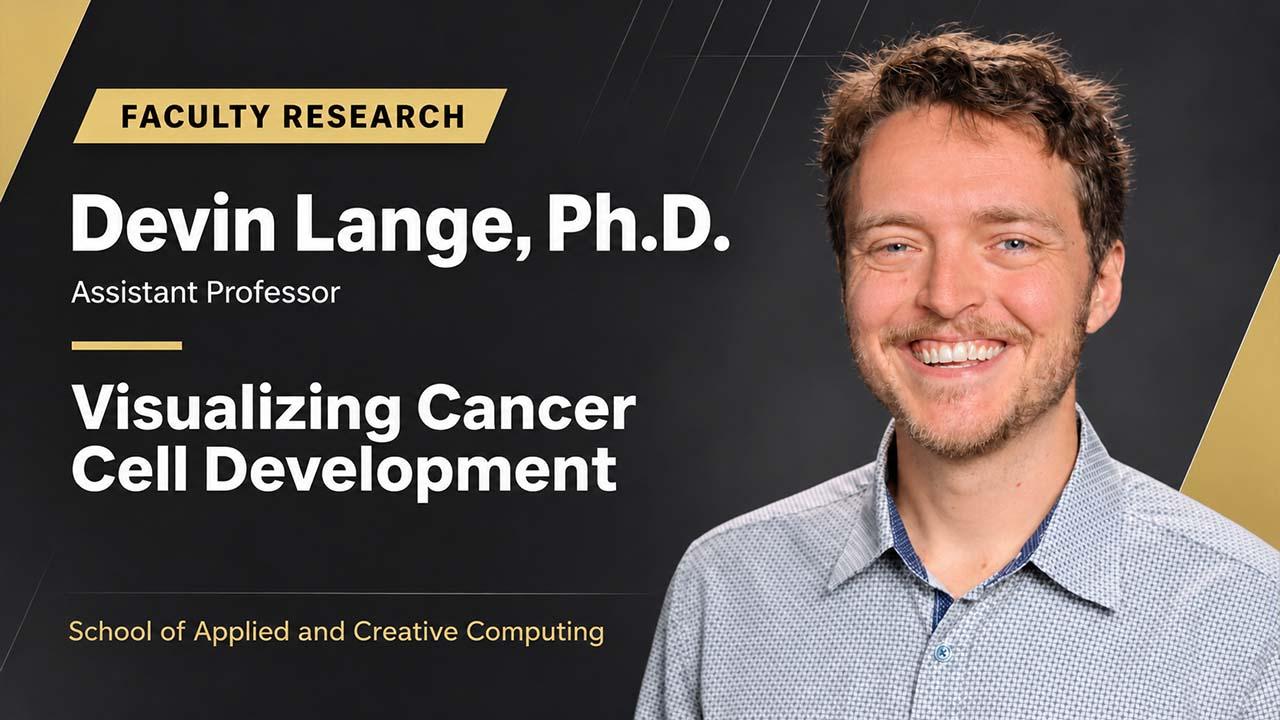
Understanding how cancer cells develop, grow and spread is an important step toward identifying new ways to prevent and treat cancer. At Purdue University, researcher Devin Lange is using data visualization to help scientists explore these complex biological processes.
Lange, assistant professor in Purdue Polytechnic Institute's School of Applied and Creative Computing, specializes in developing visualization tools that help researchers identify patterns, interpret complex datasets and uncover meaningful information.
His research focuses primarily on biomedical applications, including a project examining how cancer cells develop and spread throughout the body. Working with clinical and biological experts, Lange developed tools to help researchers investigate how cancer cells first emerge, grow, divide and move to other locations.
By making complex biological data easier to explore and understand, his work aims to support scientific discoveries that could eventually contribute to new approaches to cancer prevention.
Before joining Purdue, Lange was a postdoctoral research fellow at Harvard Medical School. His broader research also explores how artificial intelligence can be incorporated into visualization systems to improve how researchers interact with and analyze data.
During an Oct. 29 faculty presentation at Purdue University in Indianapolis, Lange discussed his cancer cell visualization research and its potential to help scientists better understand the mechanisms behind cancer development.
Watch a short excerpt from Lange's presentation.