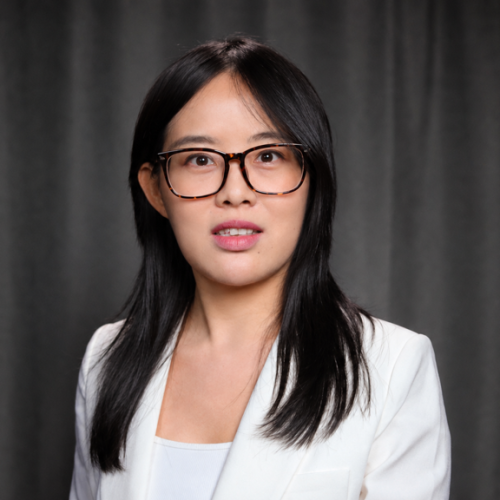
Dr. Qianqian Song's research lies at the intersection of artificial intelligence, computational biology, biomedical informatics, and precision medicine. She is an Associate Professor at Purdue University and leads the Purdue Polytechnic Digital Health Innovation Center (PDHIC), where she fosters interdisciplinary research connecting artificial intelligence, data science, digital health, and translational medicine.
Dr. Song's research program focuses on AI-driven drug discovery, multimodal biomedical data integration, single-cell and spatial omics, and precision medicine. Her group develops graph-based artificial intelligence, deep learning, and large language model to integrate molecular, single-cell, spatial transcriptomic, histopathology, imaging, and longitudinal clinical data. These approaches are designed to characterize cellular heterogeneity, uncover disease mechanisms, predict therapeutic response, and identify actionable targets for personalized treatment.
Dr. Song is the Principal Investigator of an NIH Maximizing Investigators' Research Award (MIRA/R35) focused on developing machine learning, statistical, and deep learning approaches for understanding spatially organized cells and their relationships with disease and drug response. Her research has been supported by NIGMS, NCI, NIDDK, FDOH, and other foundation and institutional research programs. Her broader research portfolio spans cancer, drug response and resistance, neurodegenerative disease, and real-world clinical data, with an emphasis on connecting computational innovation to clinically meaningful questions. Her research has resulted in more than 100 peer-reviewed publications, including numerous first- and corresponding-author studies, with work published in journals such as Nature Methods, Nature Communications, Nature Biomedical Engineering, Journal of Clinical Oncology, Advanced Science, Nucleic Acids Research, and Briefings in Bioinformatics. She has also developed a broad portfolio of open-source computational methods and tools for single-cell analysis, spatial transcriptomics, multimodal learning, drug response prediction, and biomedical AI. Her long-term research vision is to develop interpretable, generalizable, and biologically informed AI systems that bridge molecular, cellular, tissue, and patient-level information, ultimately enabling a more mechanistic and personalized understanding of human disease and accelerating the discovery of effective therapeutic strategies.
In addition to research, Dr. Song is actively engaged in scientific leadership, education, mentoring, and professional service. She has served as an organizer and program leader for major conferences in computational biology and biomedical informatics and as a reviewer for NIH, NSF, and international funding agencies. Her work has been recognized by honors including the Springer Nature Editor of Distinction Award, UF College of Medicine Rising Star Researcher in Data Science or Artificial Intelligence Award, the IAIBM Distinguished Service Award, and the NIH MIRA. Before joining Purdue University, Dr. Song was an Assistant Professor in the Department of Health Outcomes and Biomedical Informatics at the University of Florida. At UF, she served in multiple leadership roles in biomedical and cancer informatics, including Director of the UF Health Cancer Data Commons, Director of Translational Bioinformatics, Co-Lead of the Clinical Data Integration & Discovery Unit, Co-Lead of the Computational Biology Unit, and Co-Lead of the Cancer AI Working Group.