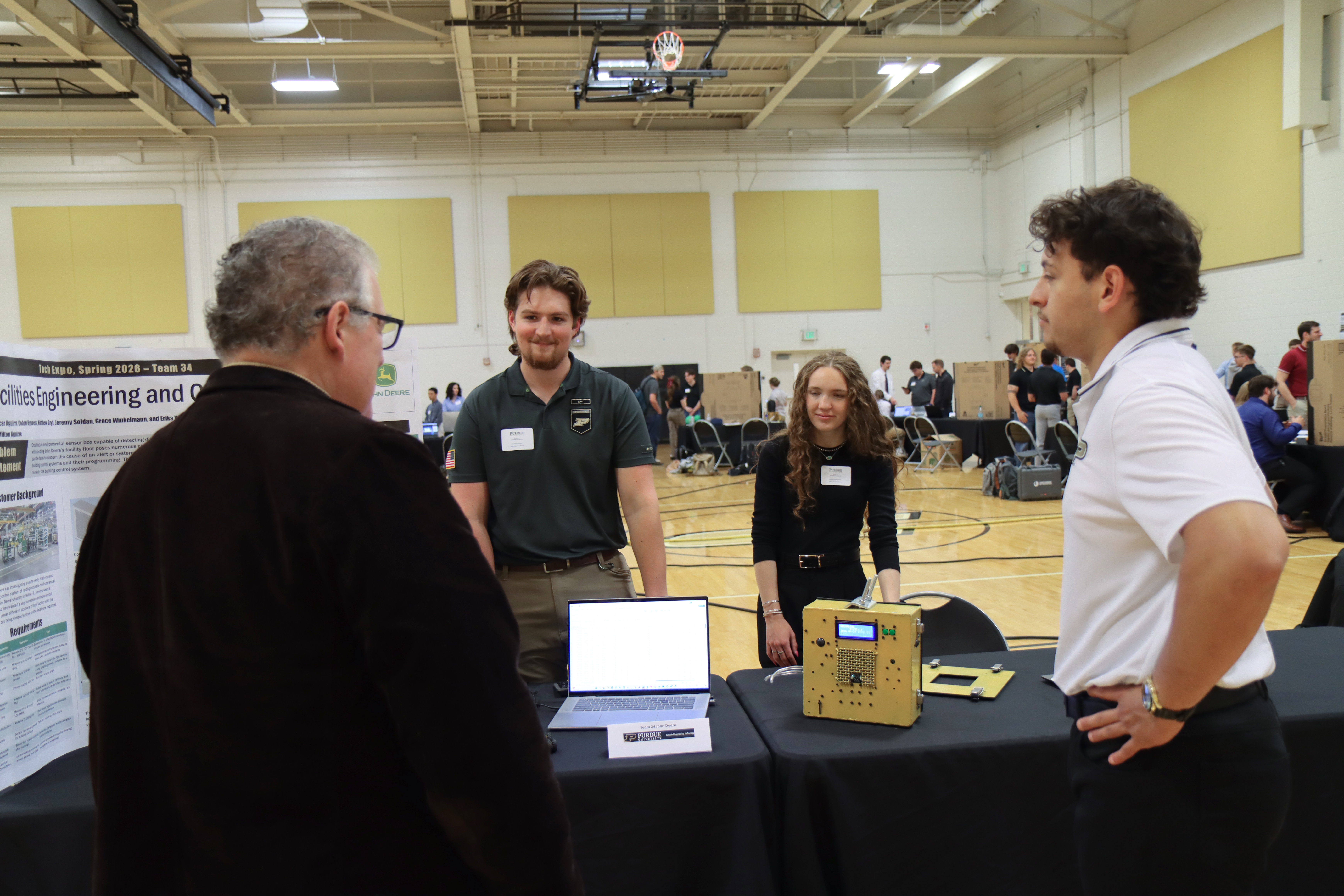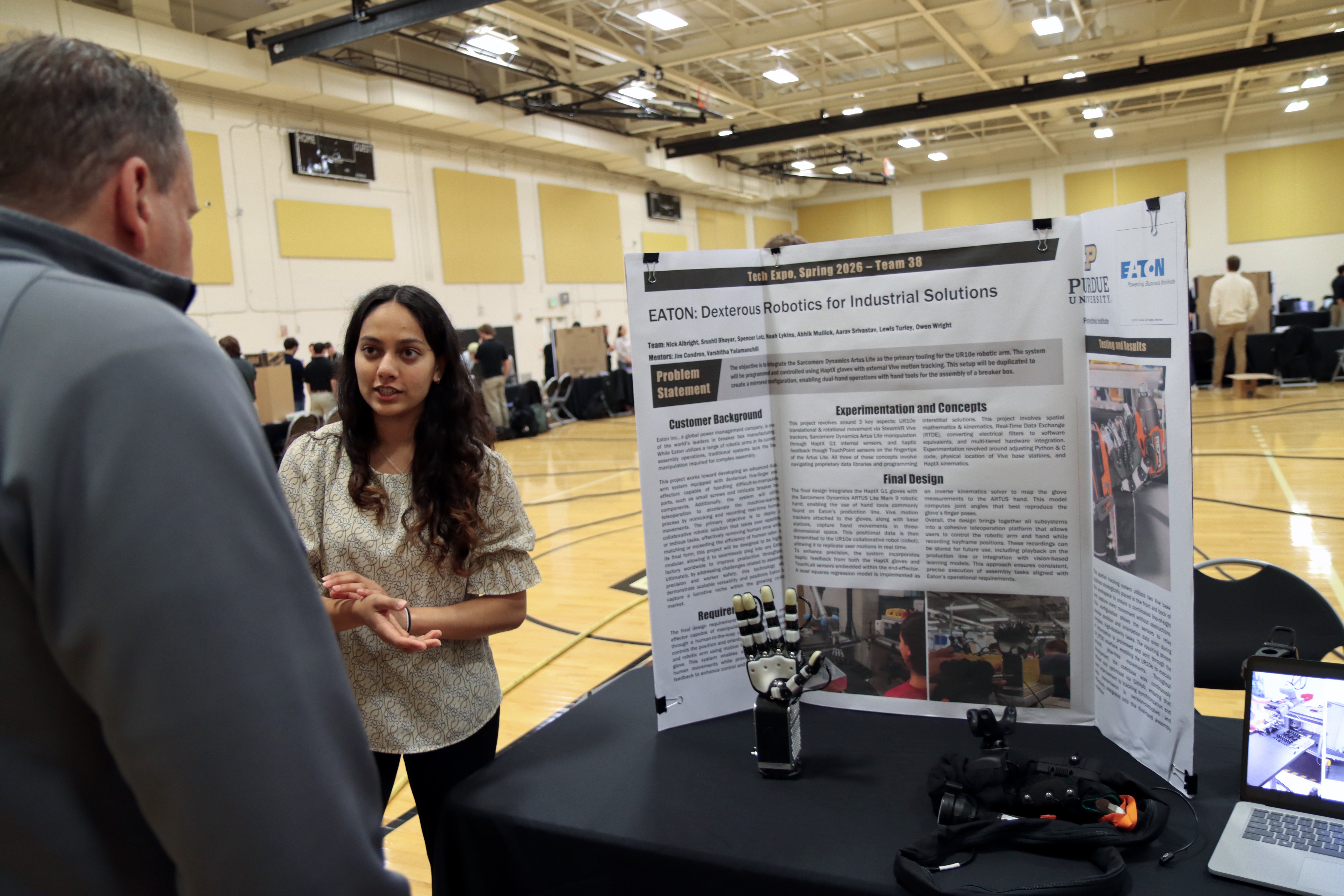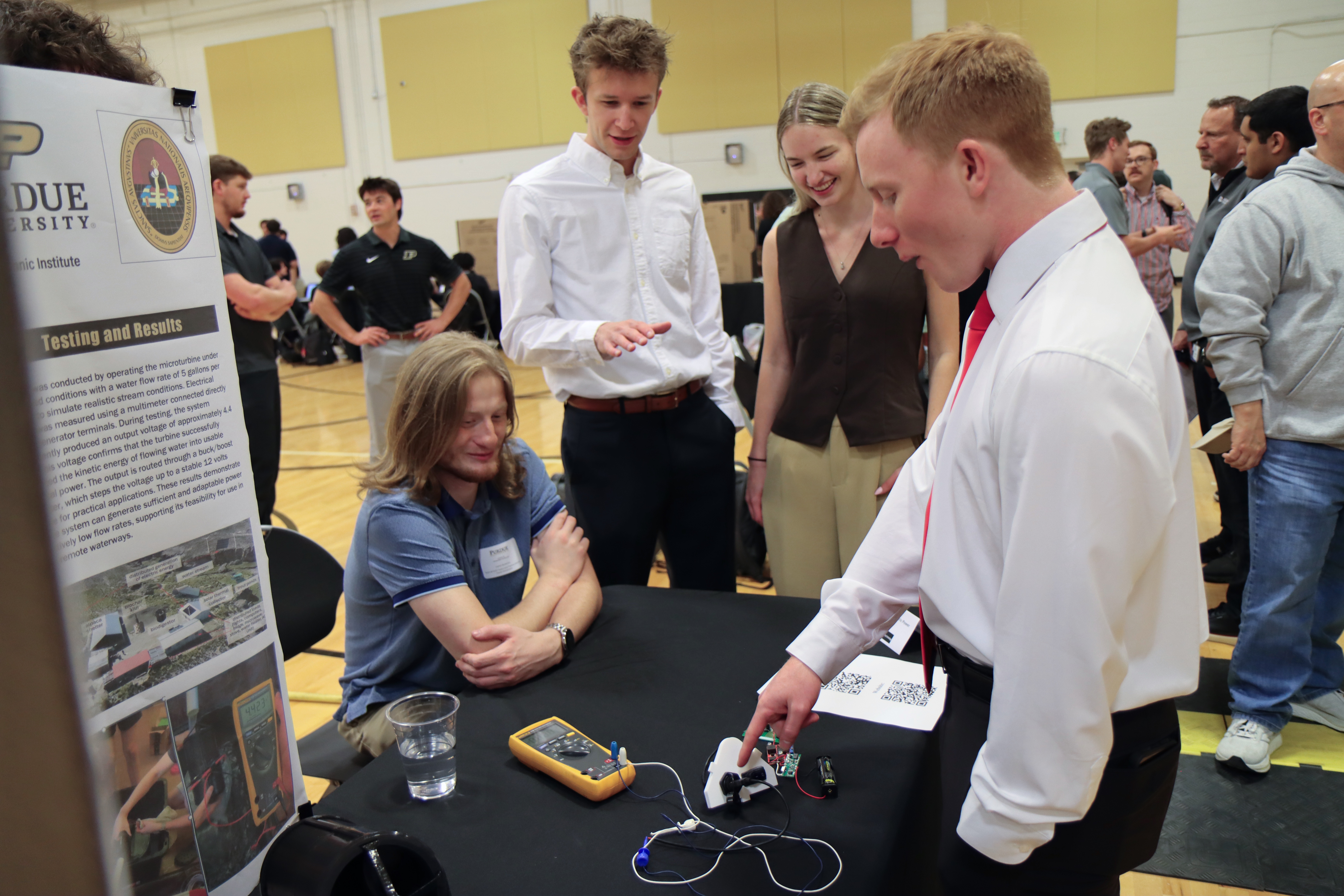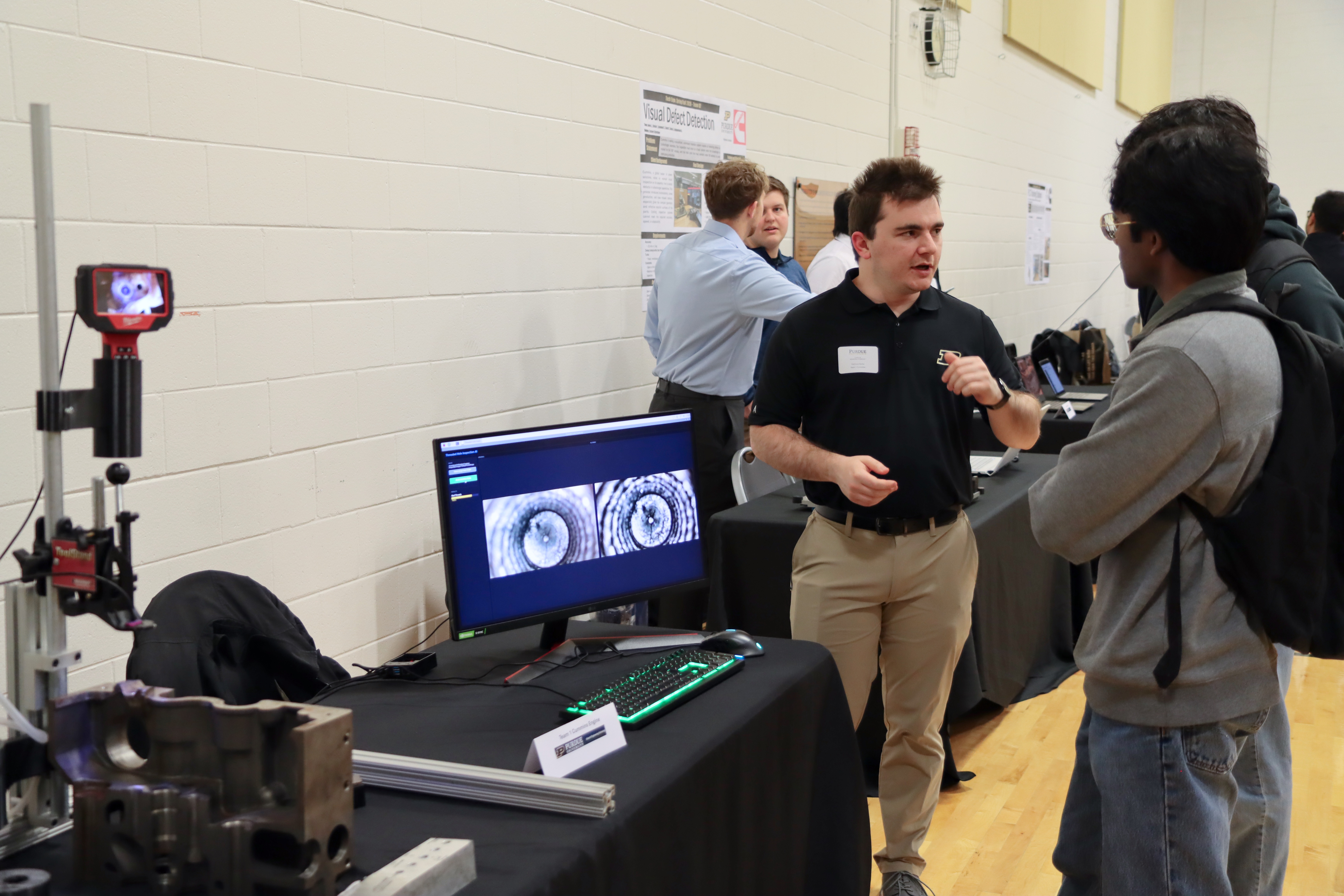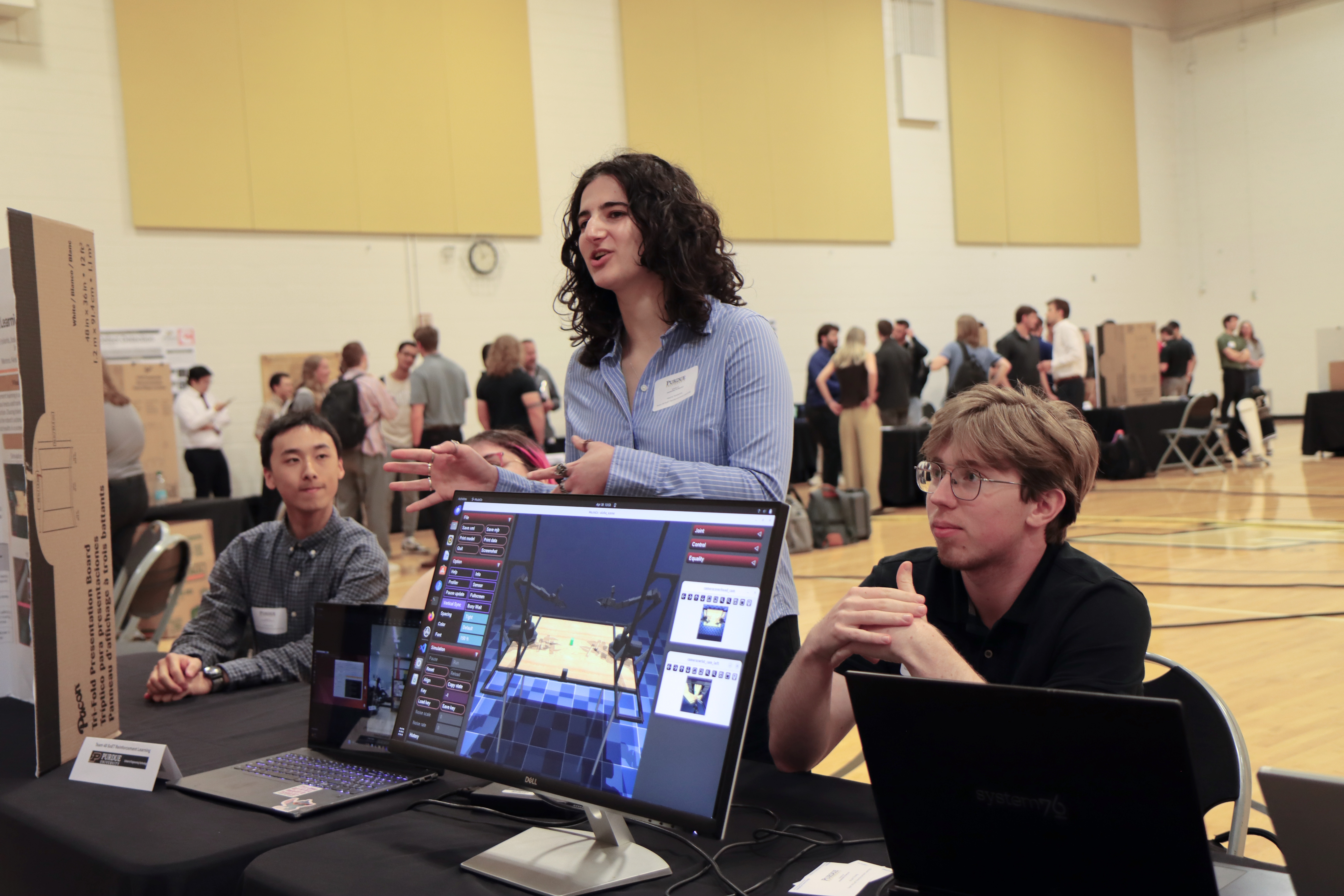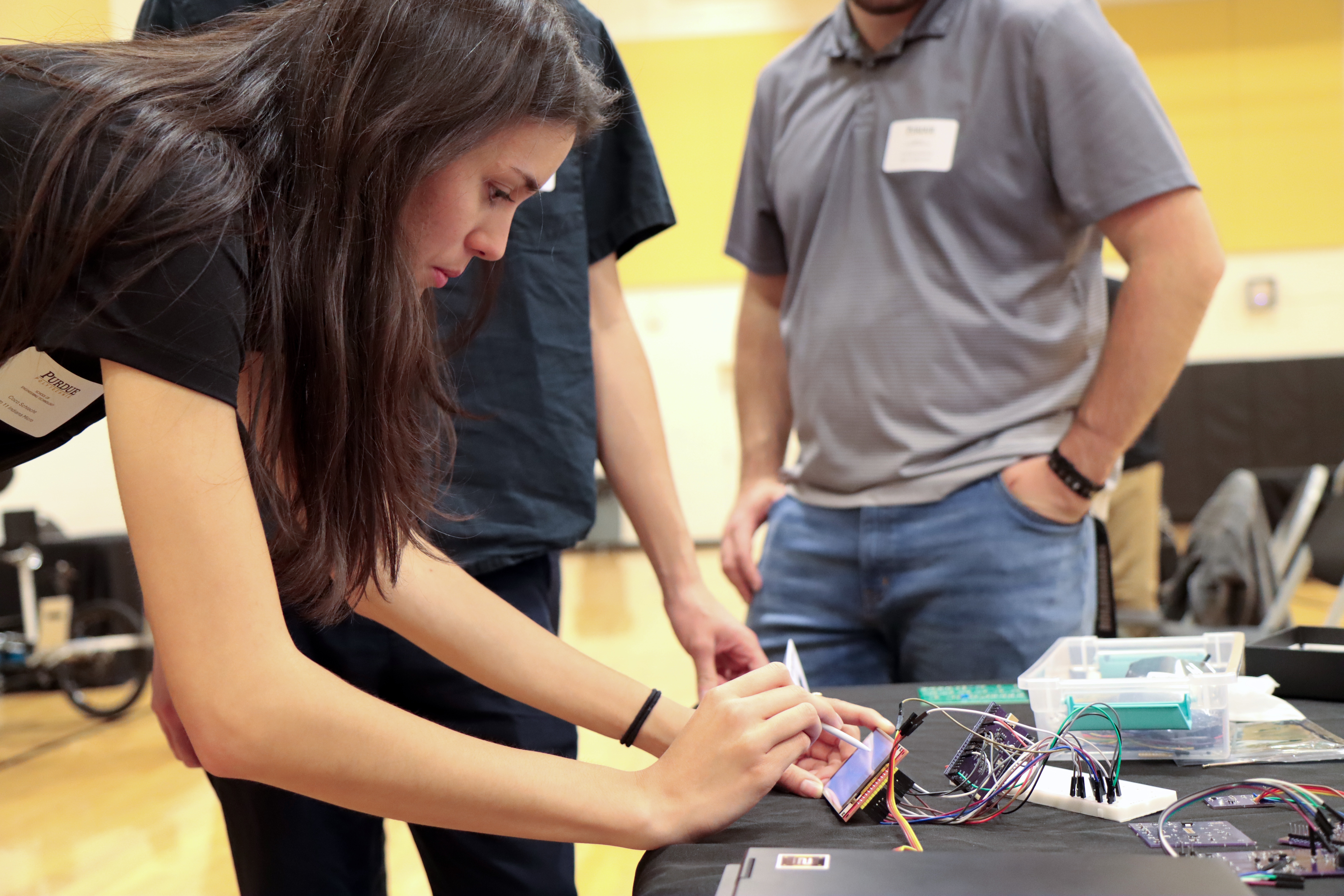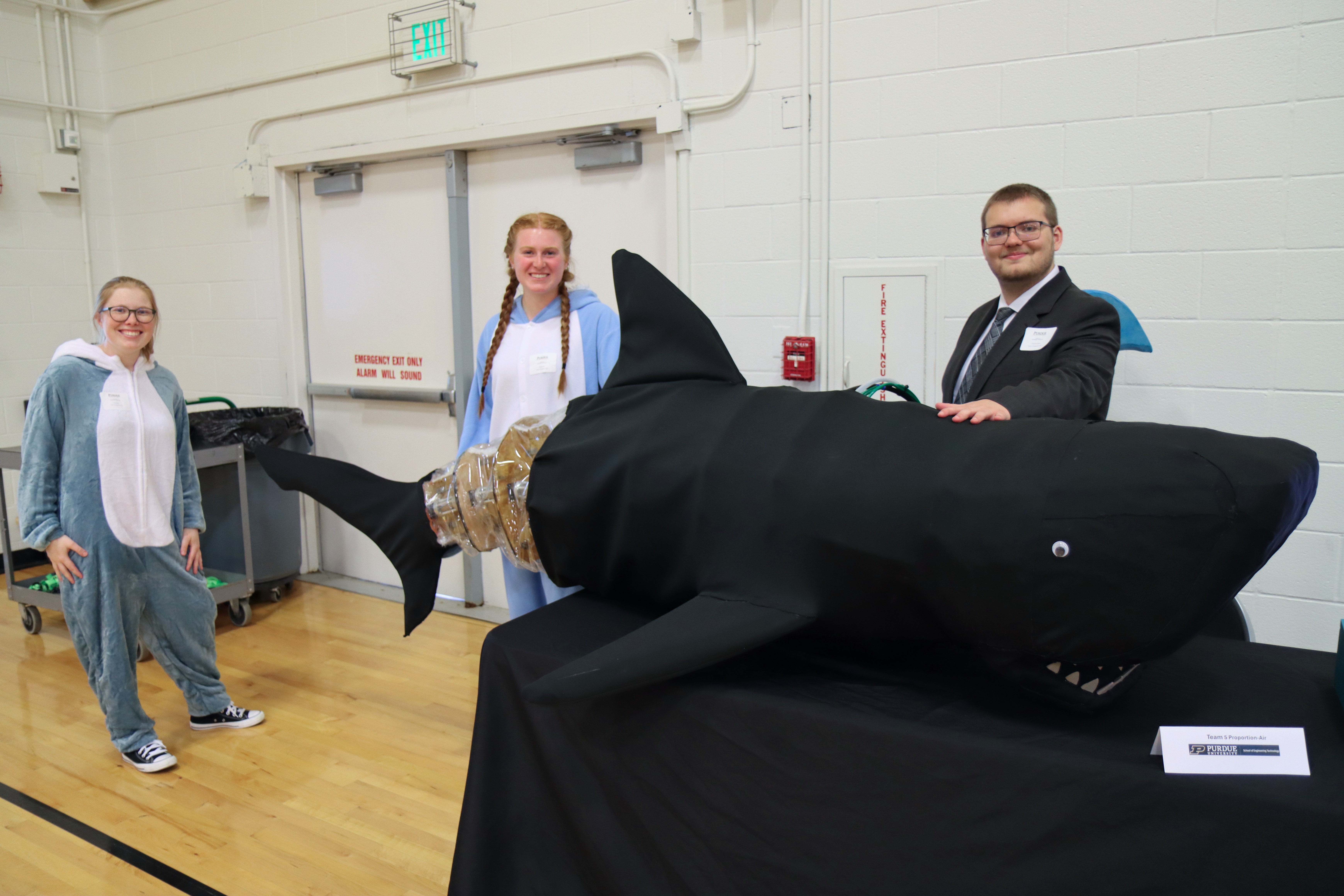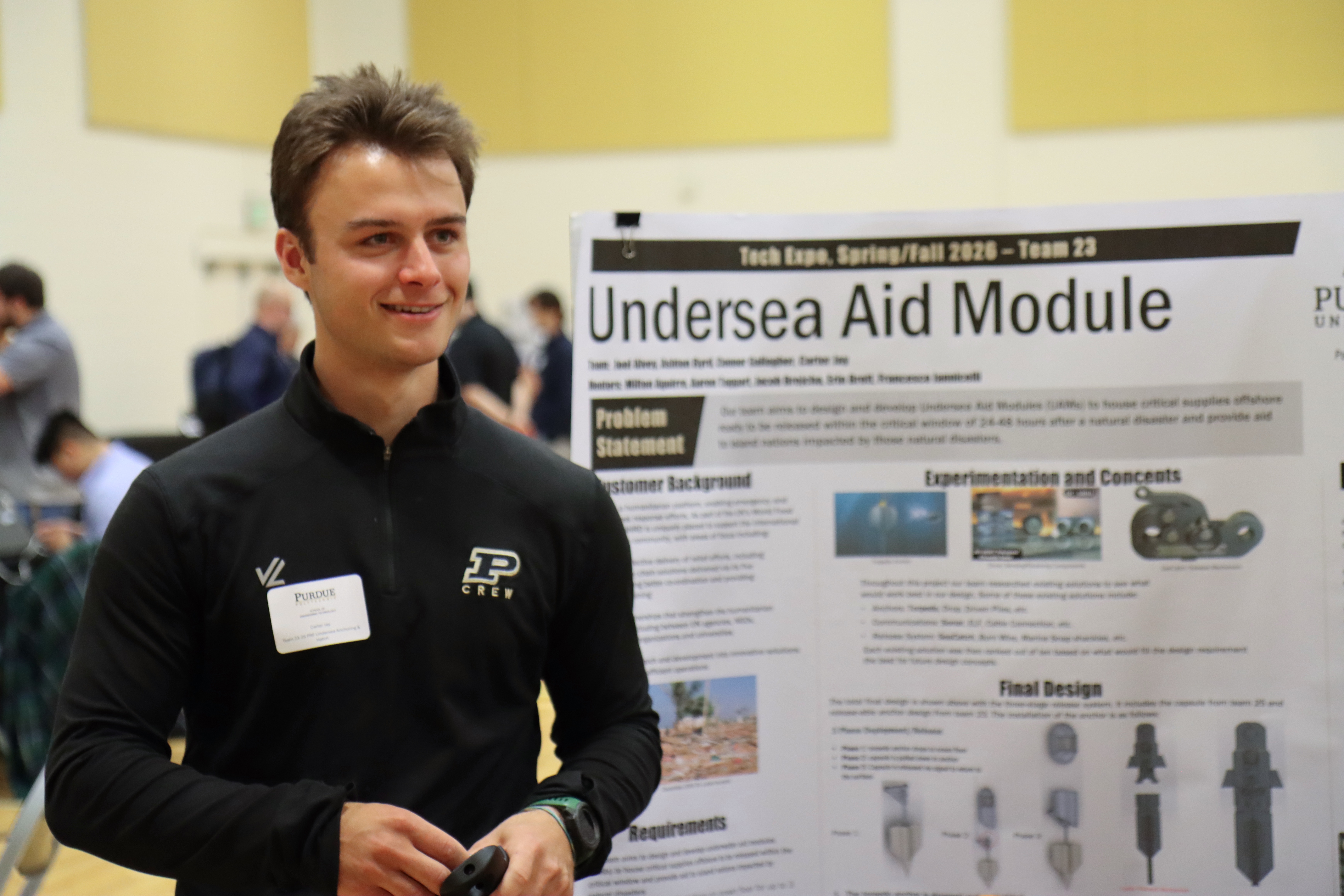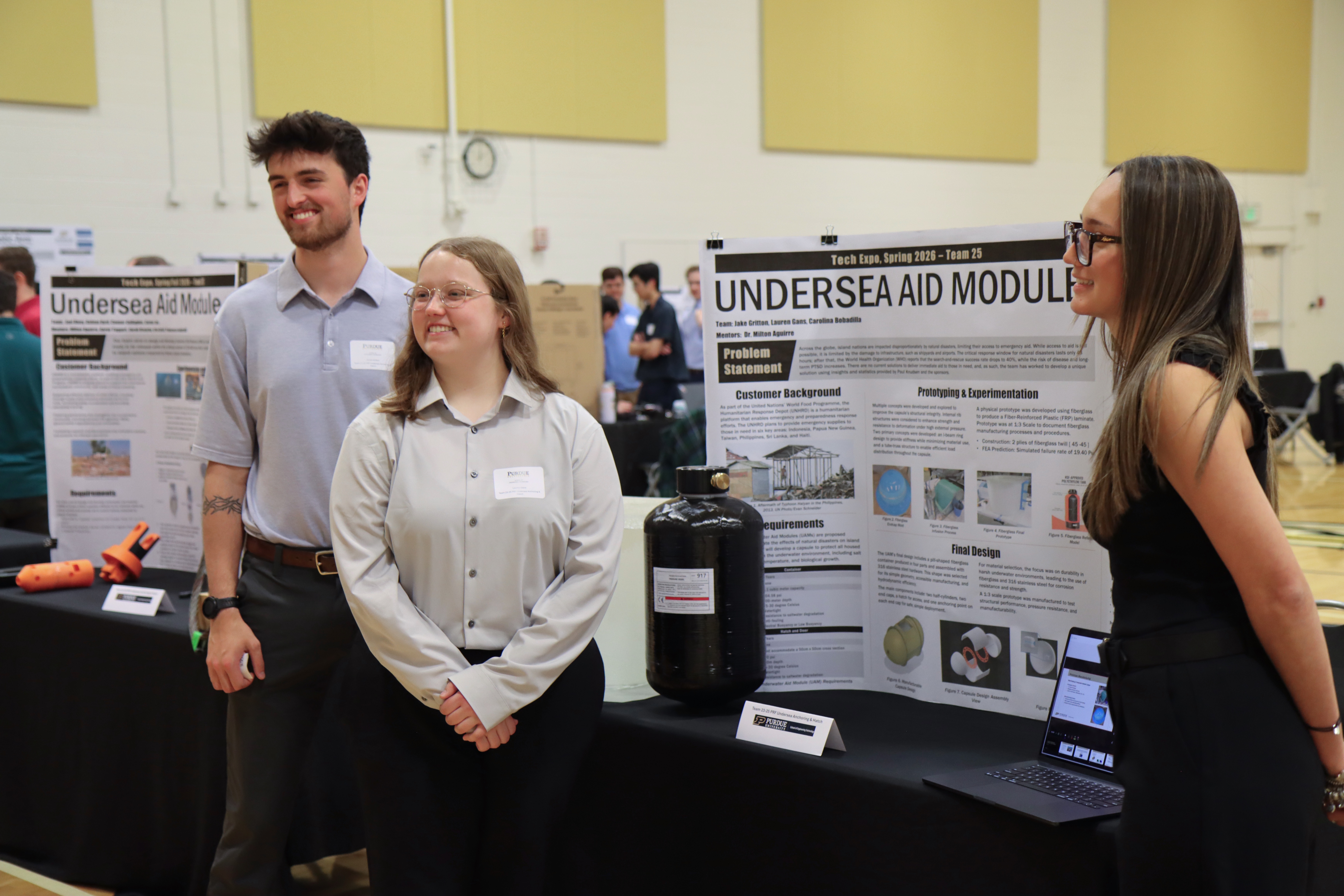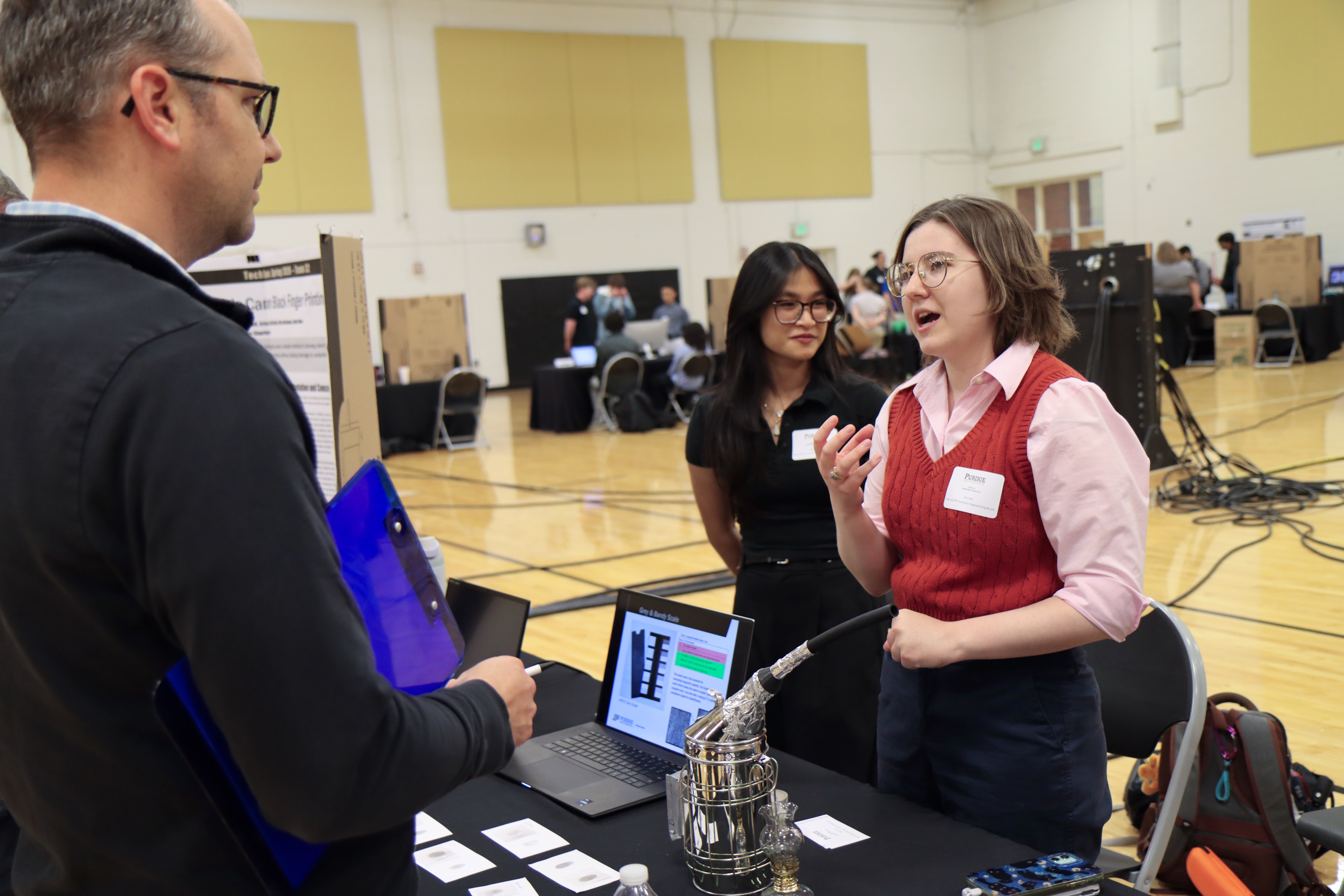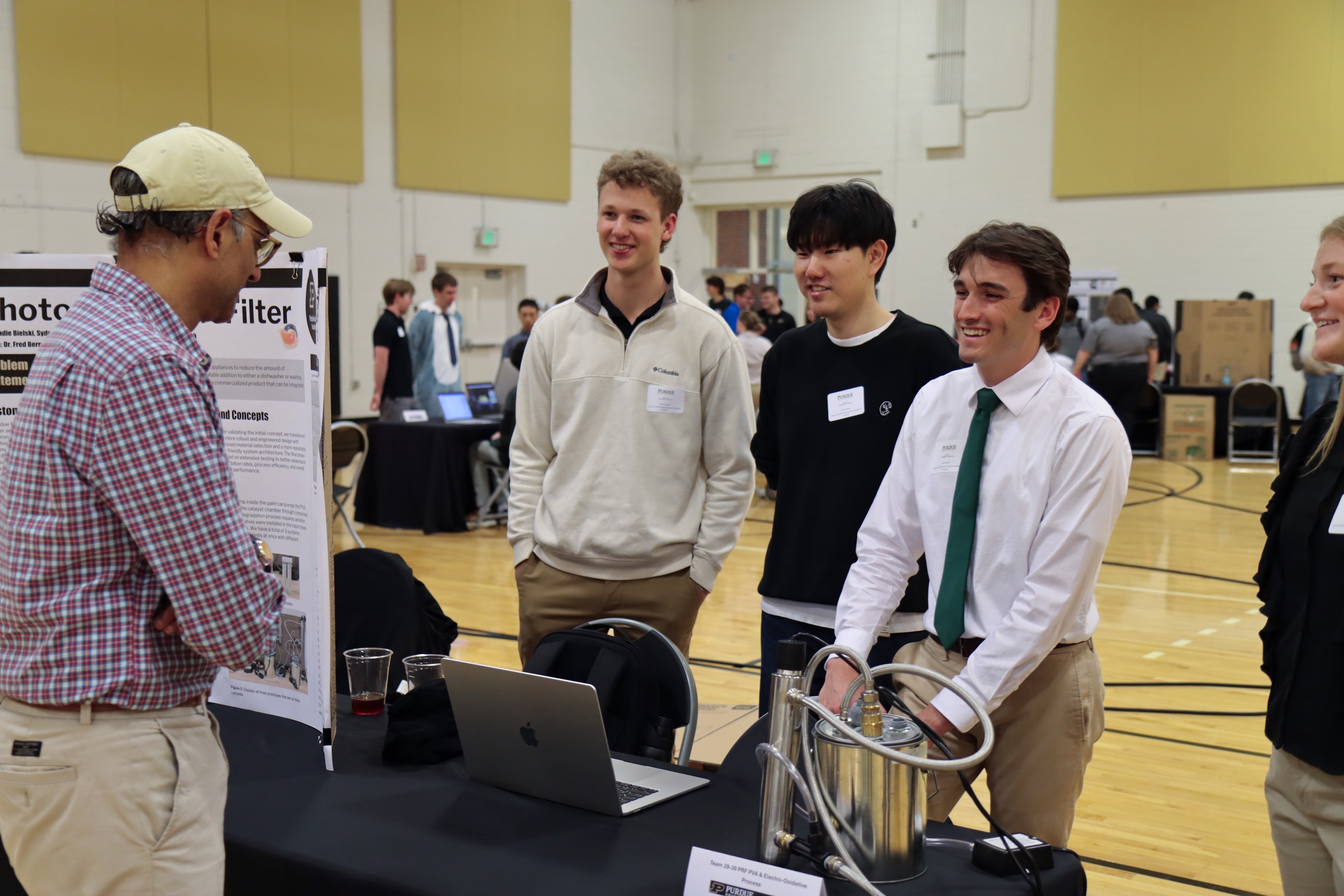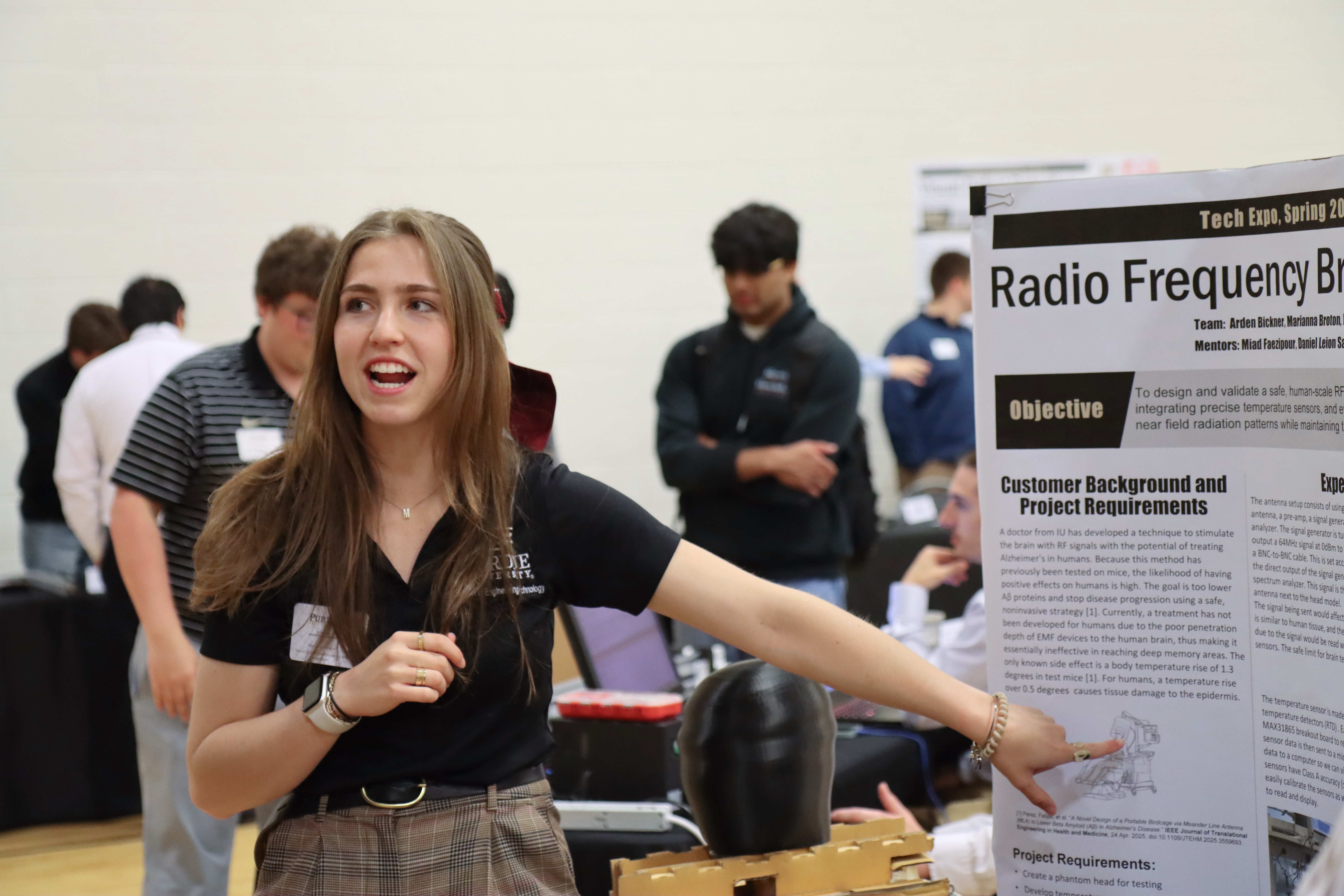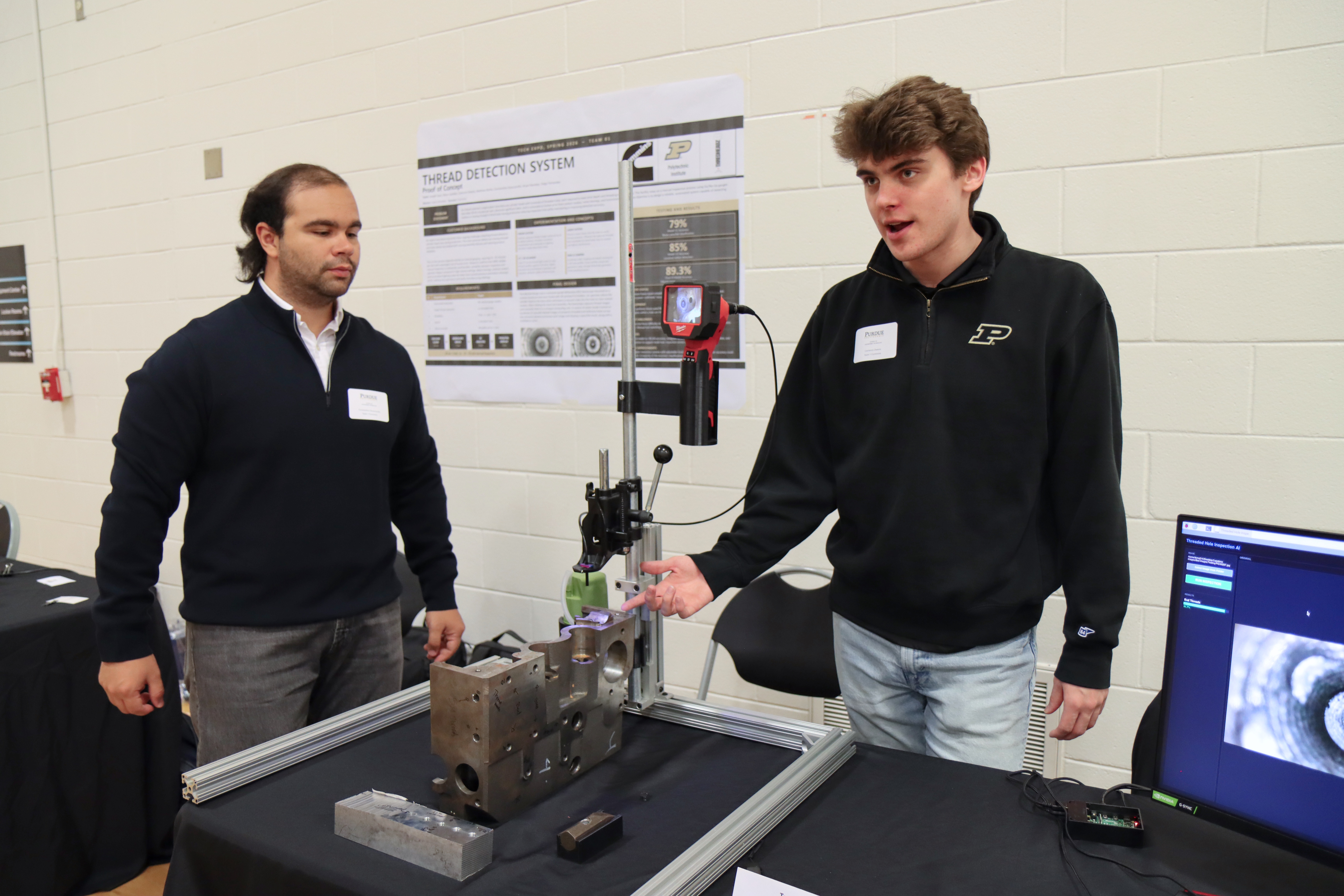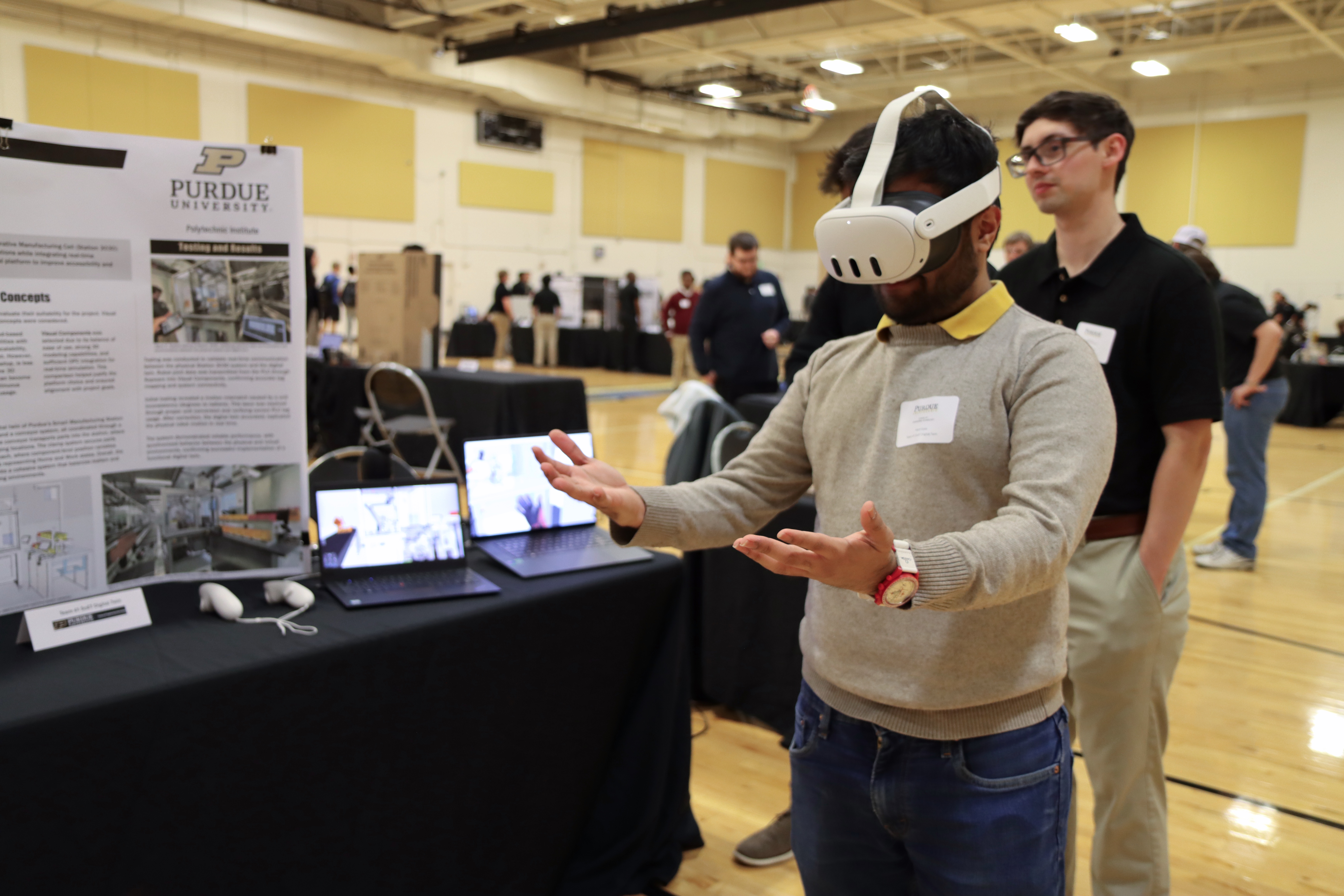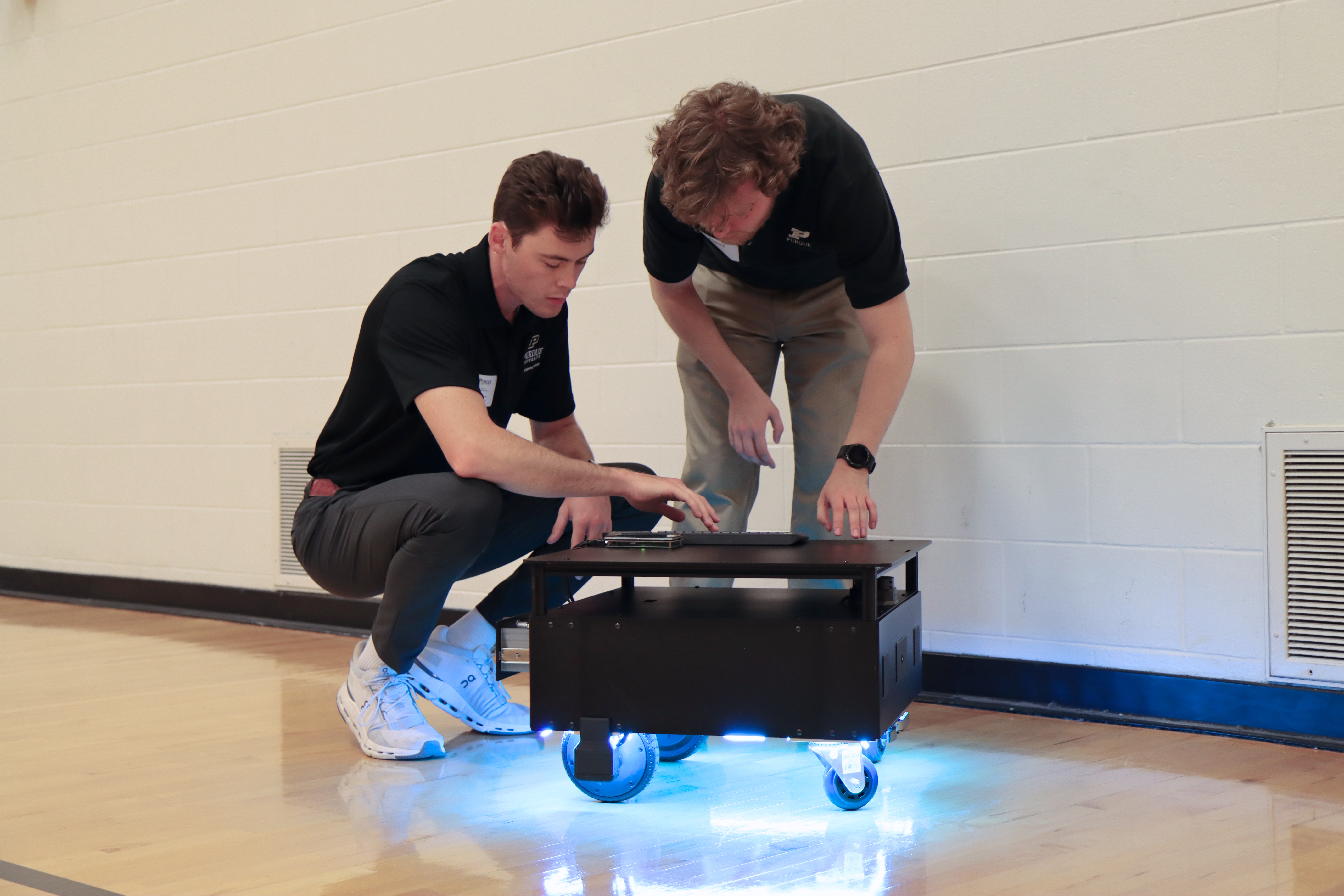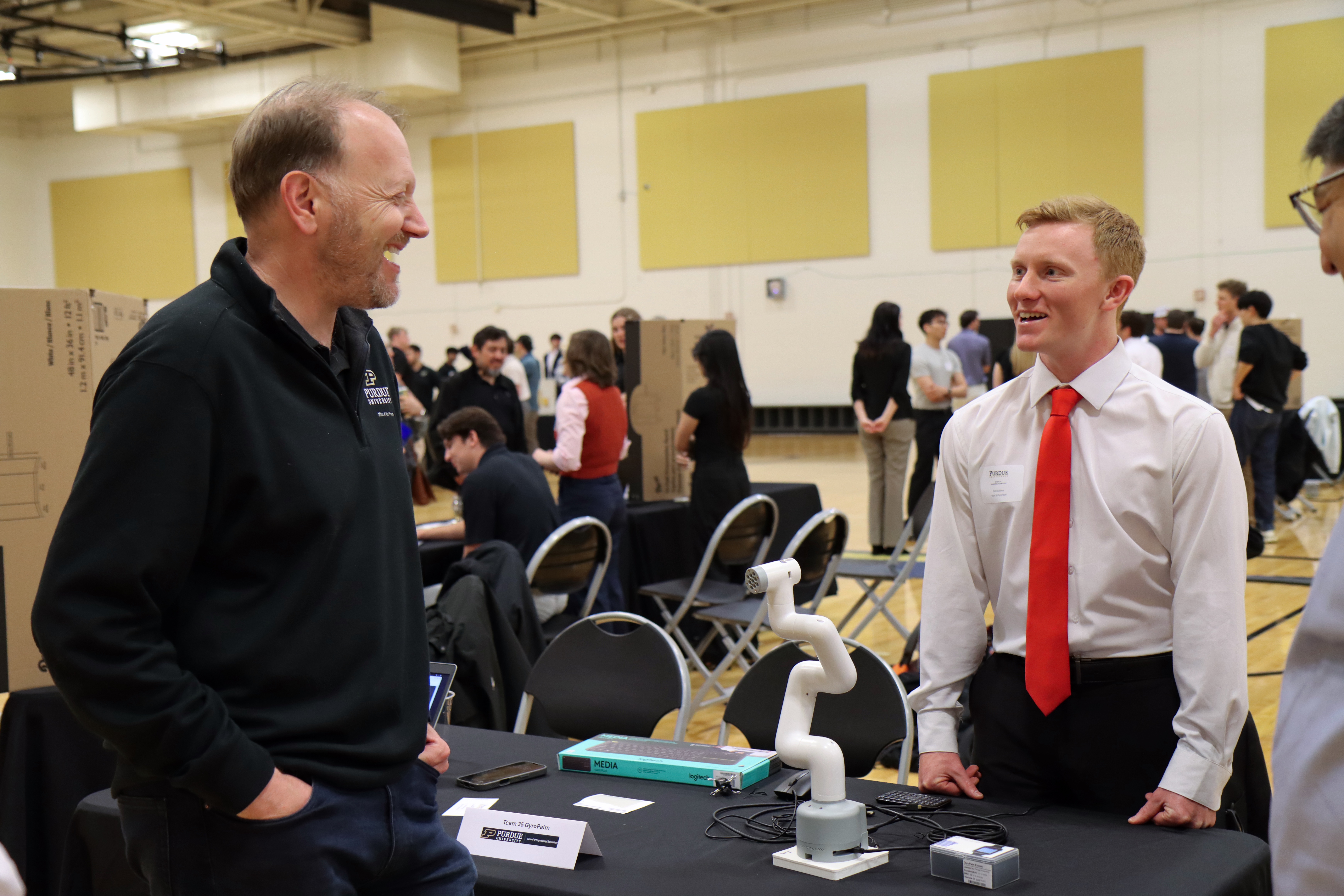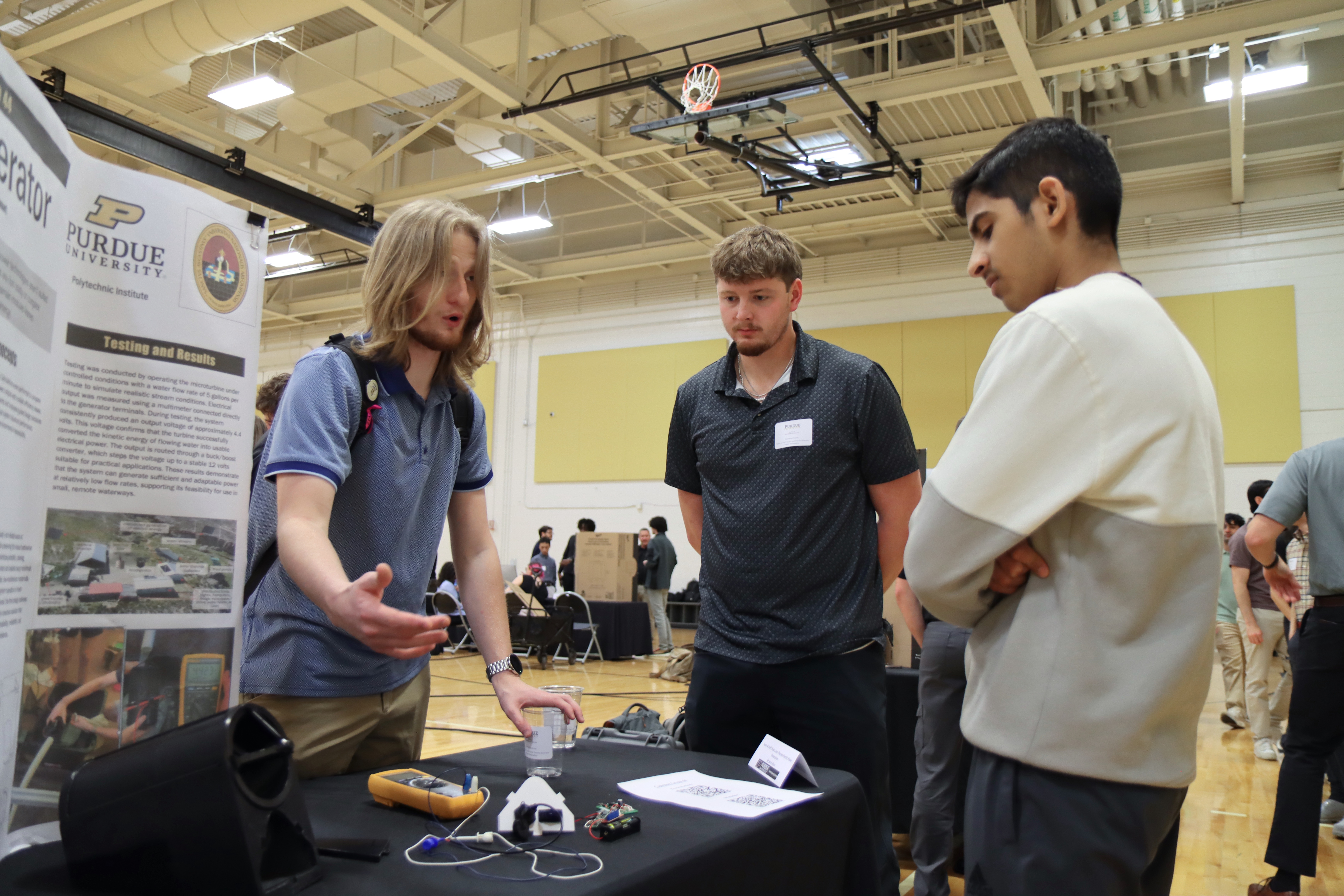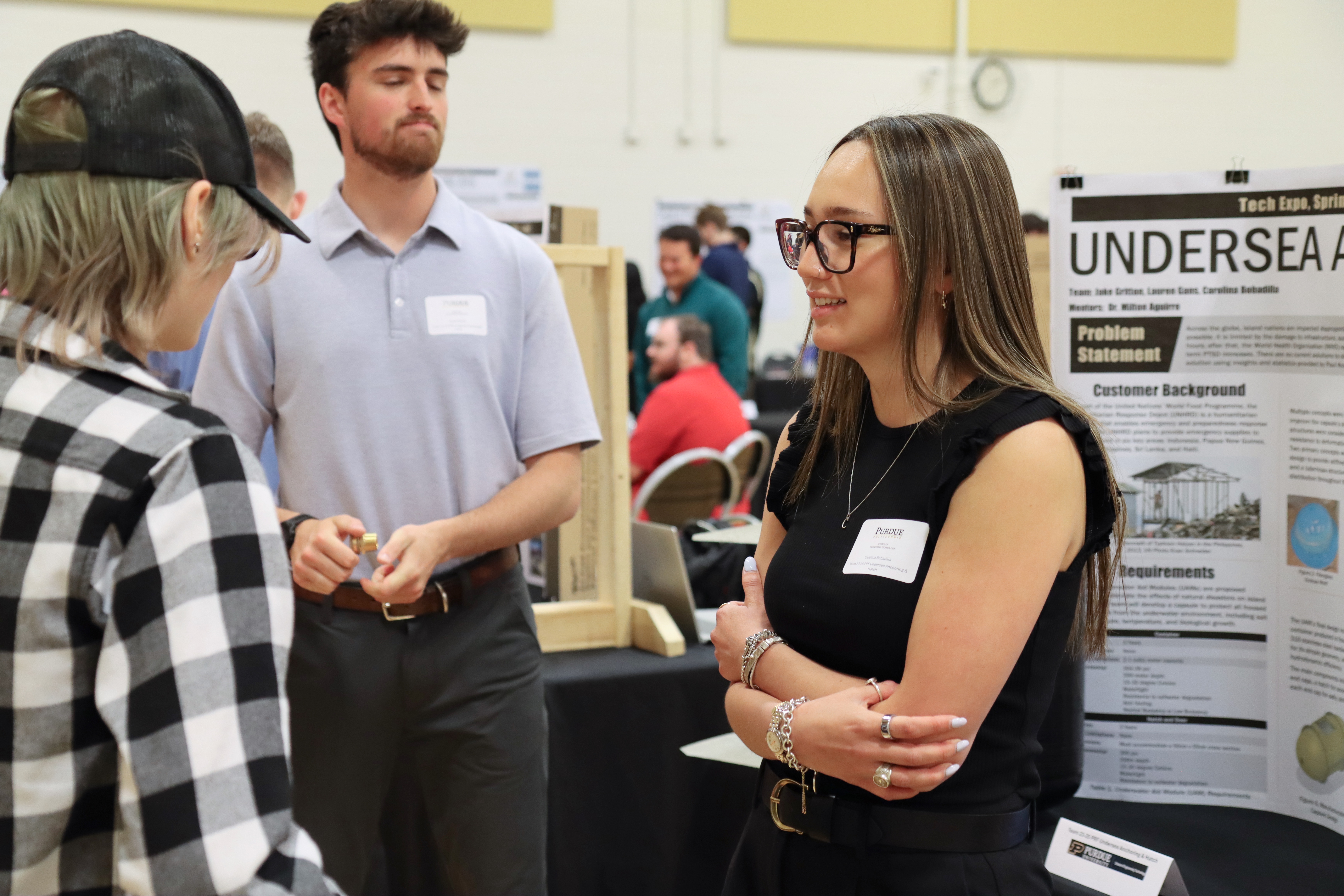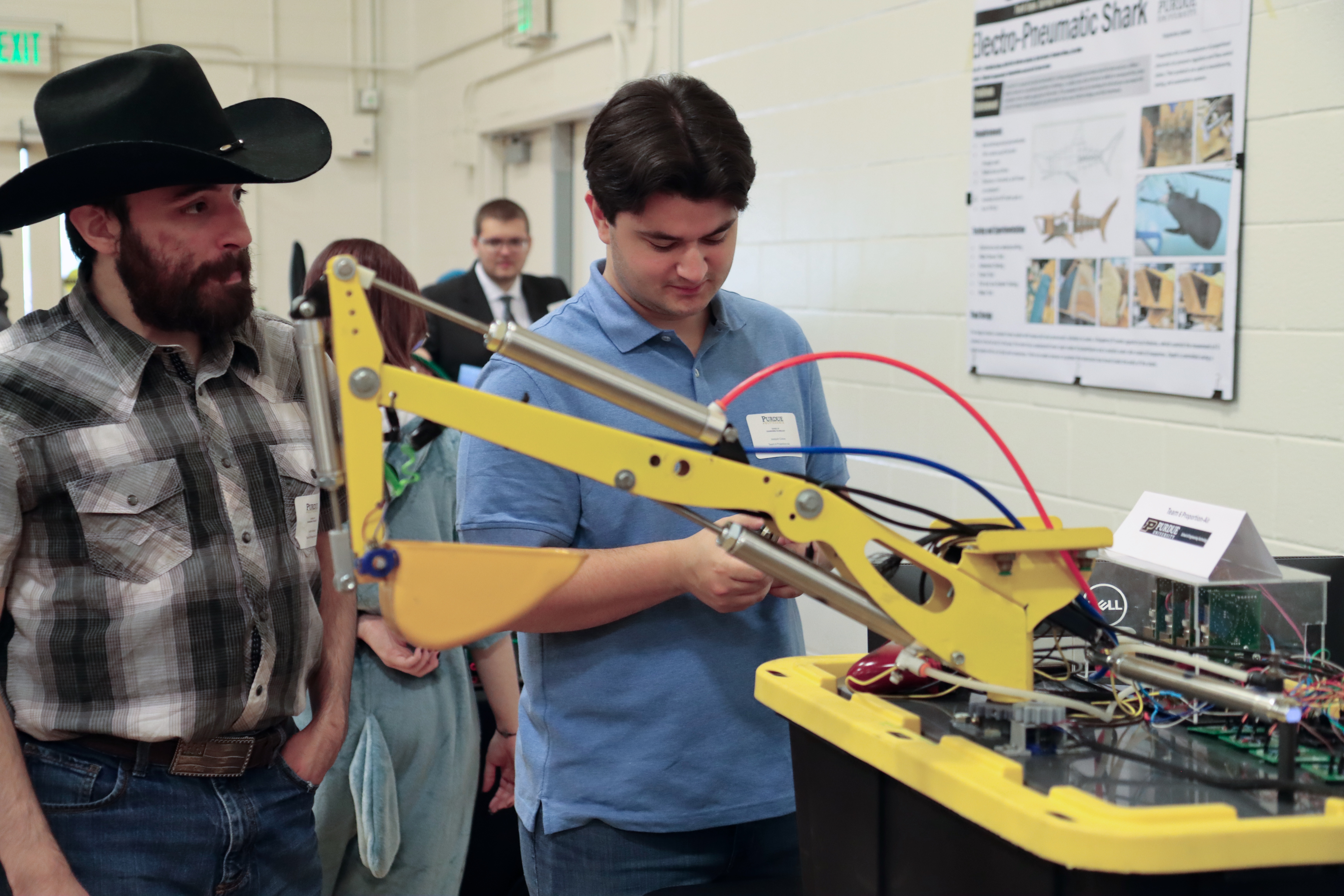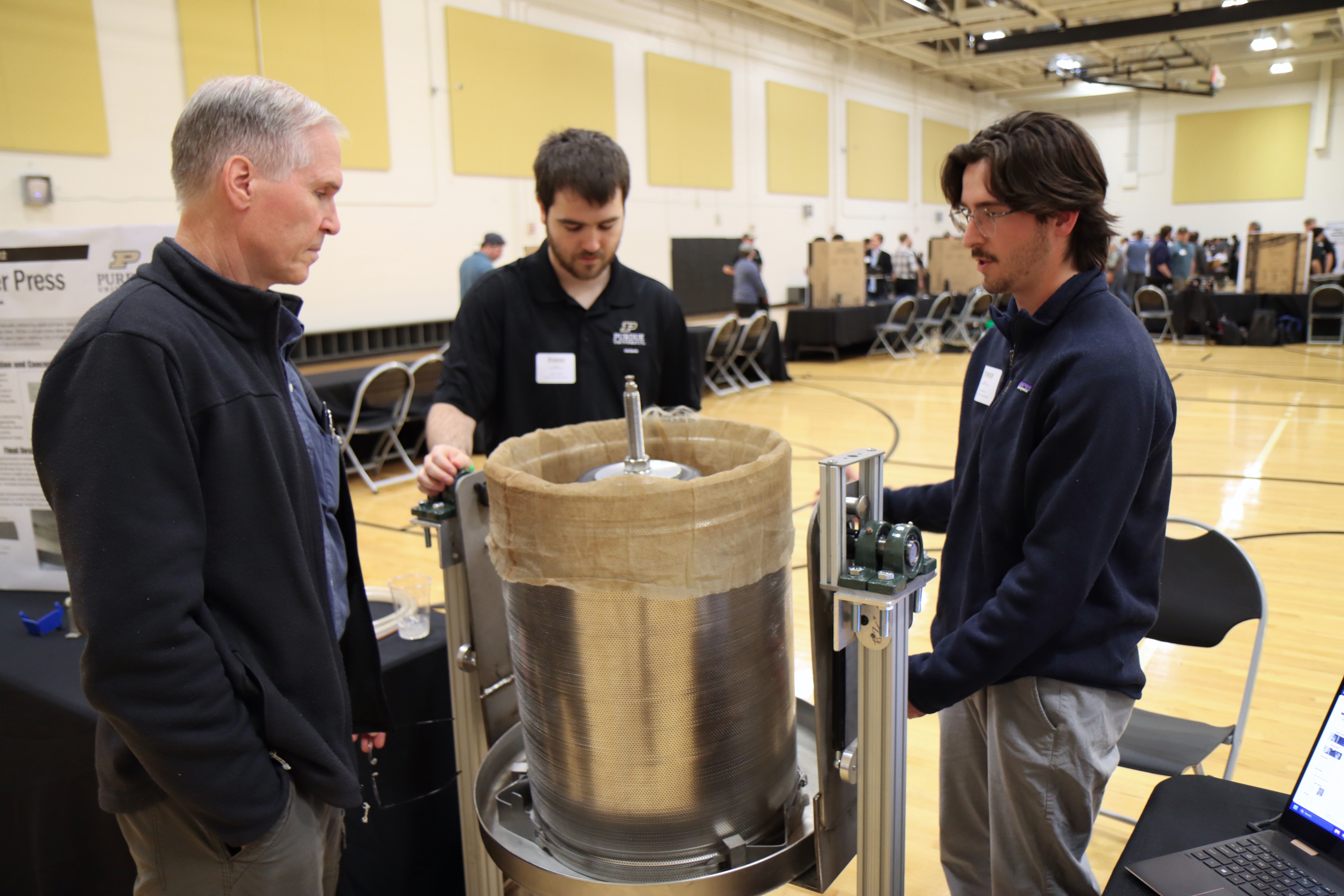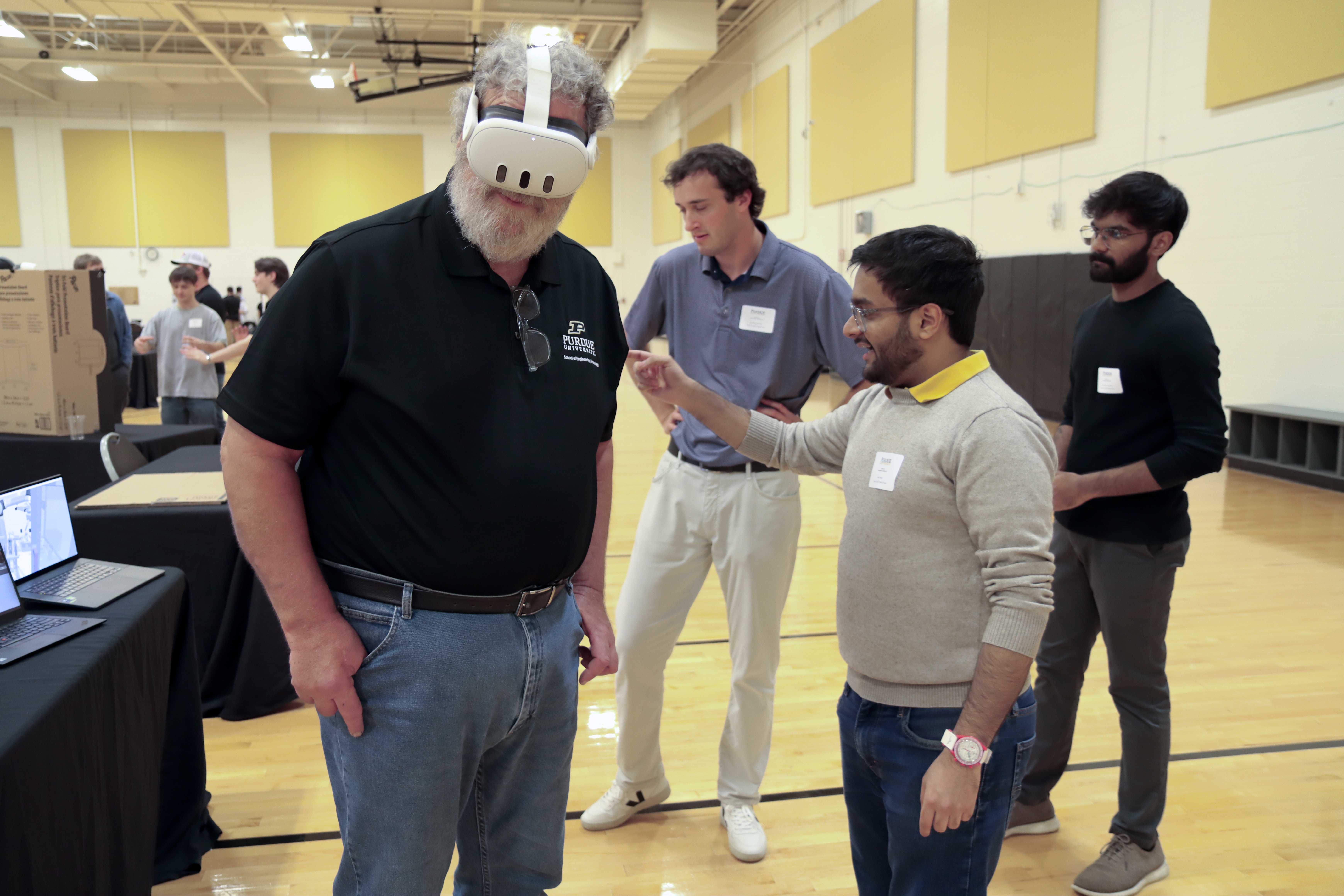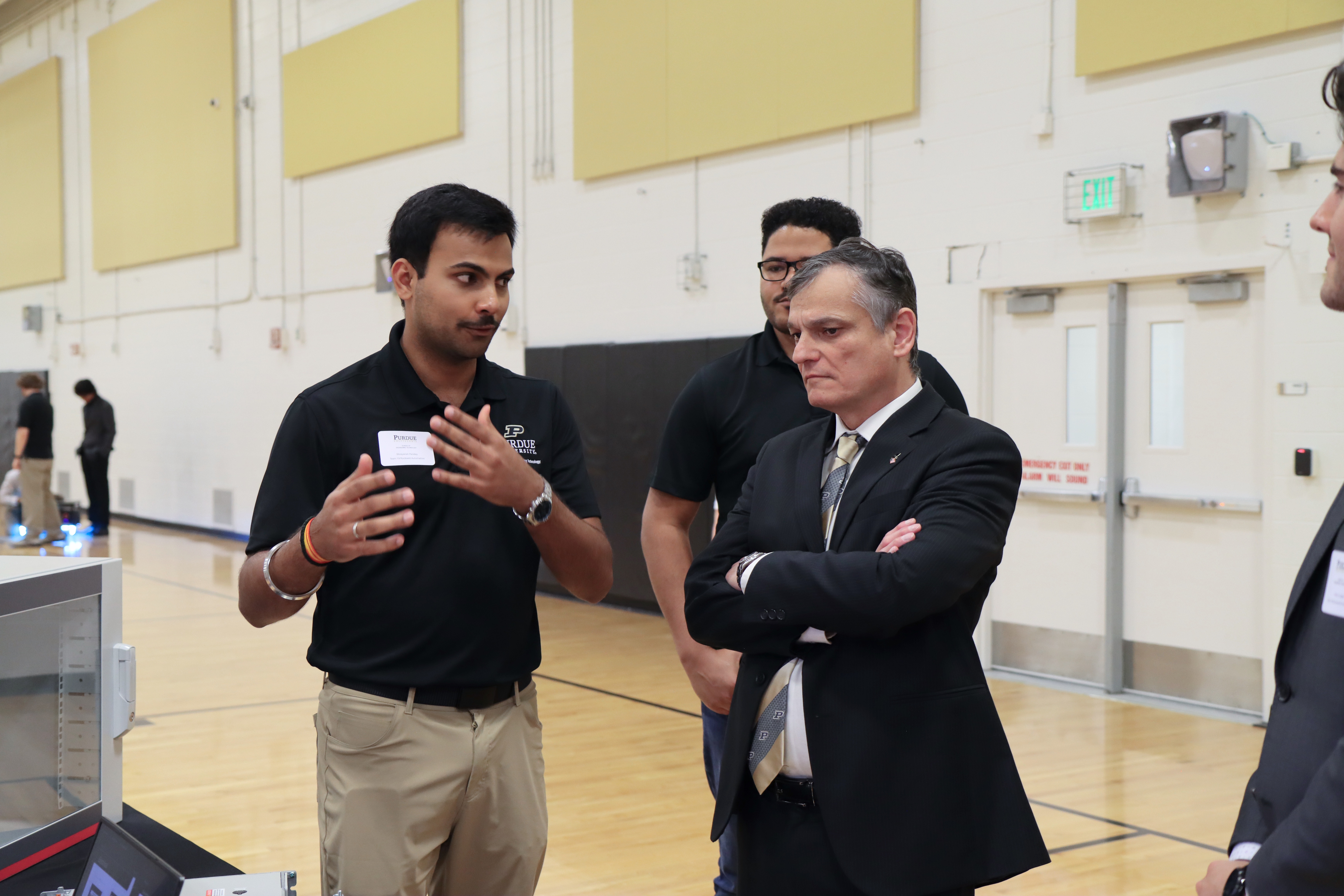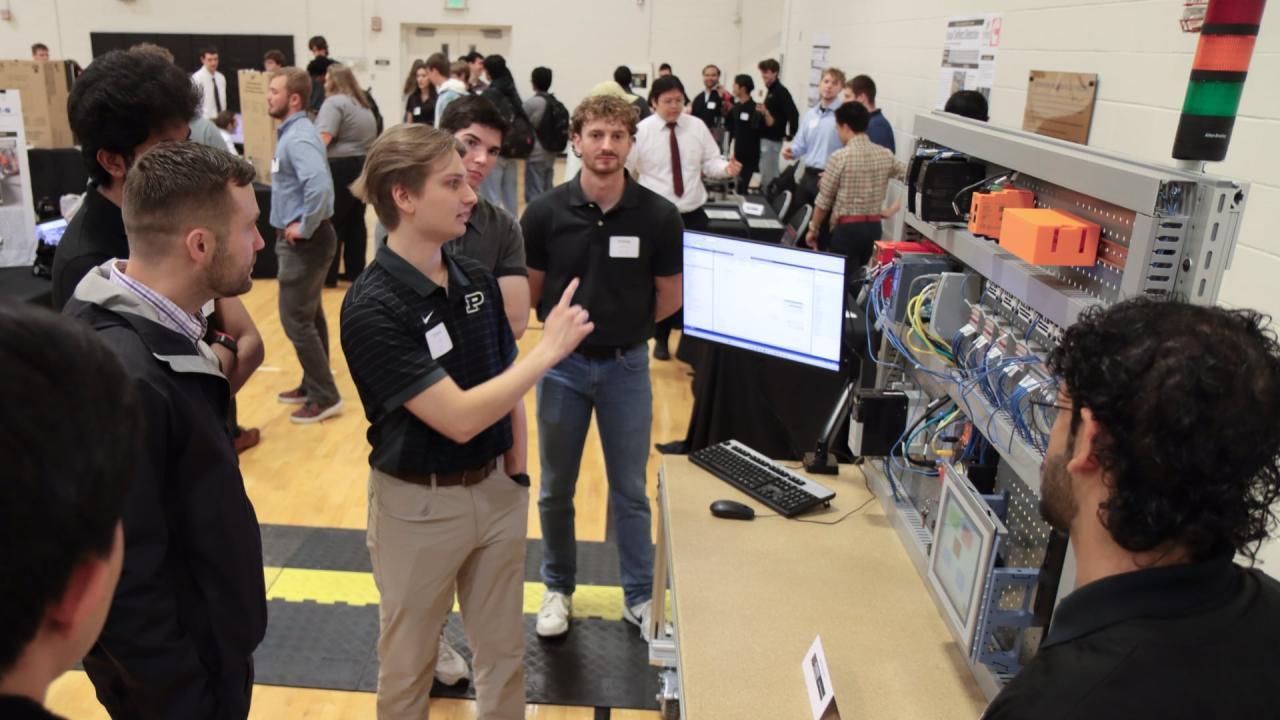
Seniors in the School of Engineering Technology in Purdue University's Polytechnic Institute demonstrate their expertise each semester with capstone projects, in which they design and build solutions to real-world problems presented by sponsoring companies from industry. Each team's capstone project, which spans two consecutive semesters, is showcased at Tech Expo each spring and fall.
Fred Berry, professor of engineering technology and director of the capstone program, says that student projects often tackle problems their industry sponsors face across a variety of engineering fields, including automation, systems integration, robotics, electromechanical technology and mechanical engineering technology.
The Spring 2026 Tech Expo, held April 30 at Purdue's France A. Córdova Recreational Sports Center, showcased the school's capstone program, with more student teams applying for commercialization licenses for their projects than in previous years. We talked with Berry about the capstone program's evolution, including a new spring-fall cohort which often features internships.
Question: With this Spring 2026 edition of Tech Expo, is it new that student teams are applying for commercialization licenses?
Fred Berry: Yeah, this is a new thing. We've done several projects for Purdue Research Foundation (PRF) in the past — nearly 50 projects over the last several years, and 40 of those have gone into licensing. Some have gone into the creation of startup companies. PRF would like us to expand it, so we'll be going from five or six a year to 30 per year. Why not? We have several student-owned startups that have come out, and a bunch of other startups that we're involved in.
Question: In addition to getting a sponsor and designing and building a project over the course of two semesters, is it now part of the standard capstone process for teams of seniors to also apply for a commercial license? Will every team do that?
Berry: Not every team, because we still want to them not to lose close contact with our industry sponsors. That being said, some of our sponsors retain the intellectual property (IP) created by our students here at Purdue and use it launch a new product or startup company. And they might actually hire our students to go work at that specific company. Industry partners are sponsors of capstone projects, so they want to retain IP rights. Students create IP around projects and companies see value there. They obtain patents, and sometimes build new companies around it.
Question: Students work extensively with their industry sponsors over the course of two semesters, so it's like an extended job interview. And, of course, they're designing and building projects to solve the sponsors' needs. How often does that lead to actual job offers?
Berry: Unofficially, but based upon people running up excitedly to me, many of them get offers from their capstone companies. It's probably pushing 50%. In the past, I know it's been as high as 80%. That doesn't mean students accept those offers, but many do get offered jobs for after they graduate.
The other thing that's happening is that in addition to the traditional fall-spring cohort — that's when students begin their two-semester capstone projects in August — we now offer a spring-fall cohort. It's becoming very popular with companies because they can sponsor a capstone project for students to start in January, and then those companies hire them as interns for the summer. Students work continuously on their project, finishing up in the fall.
Question: That's fantastic. Internships (and/or similar real-world experiences) are incredibly important to every major in Purdue Polytechnic. So that's a new pathway toward internships that we haven't previously had, right?
Berry: Correct. We kind of thought about capstone projects and internships as two mutually exclusive things. We can see now that there's a path to connect the two, and what's happening is the spring-fall cohort is becoming popular with students because they want to have that internship opportunity.
Question: So they take their project, in its unfinished status in late April, to their internship to refine it over the summer?
Berry: Yes, and they keep working on it with the company. They iterate. And then they come back in the fall and complete it. They have essentially the equivalent of three semesters on that project, and they're paid for one of those “semesters.”
Question: It's obvious why that would be popular. Even for the student teams that maybe don't score a job offer out of this, they still put their capstone projects on their resumes as an example of what they can do, right?
Berry: They do. And we also made a public-facing website where students can display all their work, sometimes including videos. Of course, they've always got to be approved by the sponsor company on that. It's something that they can link to and say, “Here's an example of what I've done.” It makes their resume more of a living document. And it's also popular for students to include personal contact information there for all potential employers to see.
Question: Capstone projects, and the Tech Expo showcase at semester's end, are important ways for the School of Engineering Technology and our Polytechnic college to help students prepare for jobs after they graduate. But, years ago, the focus on capstones began for a different reason, right?
Berry: Before capstones, student projects didn't usually cross beyond the boundaries of a single semester or a specific major. A lot of learning can take place when students stretch beyond that, to take on projects that are similar to what companies do in the real world.
Fundamentally, for capstones, we haven't changed the premise. It's for learning. We make no guarantee to a company or to anybody that you're going to have a successful project. We'll guarantee the students will work on it and they're going to make a real effort.
That being said, we have an overwhelmingly high success rate for these projects. But we still have to be upfront with our industry partners that capstone projects are for the learning.
And these are required courses in our curricula that the students have to take. The other big advantage that we have is that students in all our majors work together. We can do a very diverse set of projects — it's not just Mechanical Engineering Technology students doing mechanical engineering projects or Electrical Engineering Technology students doing electrical engineering projects.
Question: How many of the sponsor companies are international?
Berry: I would say, conservatively, one-third of them, because they're global companies. like Rockwell and Eaton, who are sponsors. We are also doing joint international capstones with UTEC (the University of Engineering and Technology in Lima, Peru). We've also expanded our capstone operations to include the College of Engineering and Sciences at Purdue Northwest. Their students are now taking our capstones and doing joint projects together with integrated teams, and it's expanded our abilities.
Question: Capstone courses became required for students a dozen or more years ago. We have a track record now that shows more than a decade's worth of projects and how previous sponsors benefited from partnering with us. As compared to then, what's it like today for finding industry sponsors who haven't worked with you, the college or Engineering Technology before?
Berry: It's still a lot of hard work, but I think it's become easier a bit because we have a story to tell and results to show. And that's one reason why we have the website. We generally pick up four or five new capstone companies every year. We've got companies like Endress+Hauser, Rockwell and others who have been with us for 15 years and keep coming back.