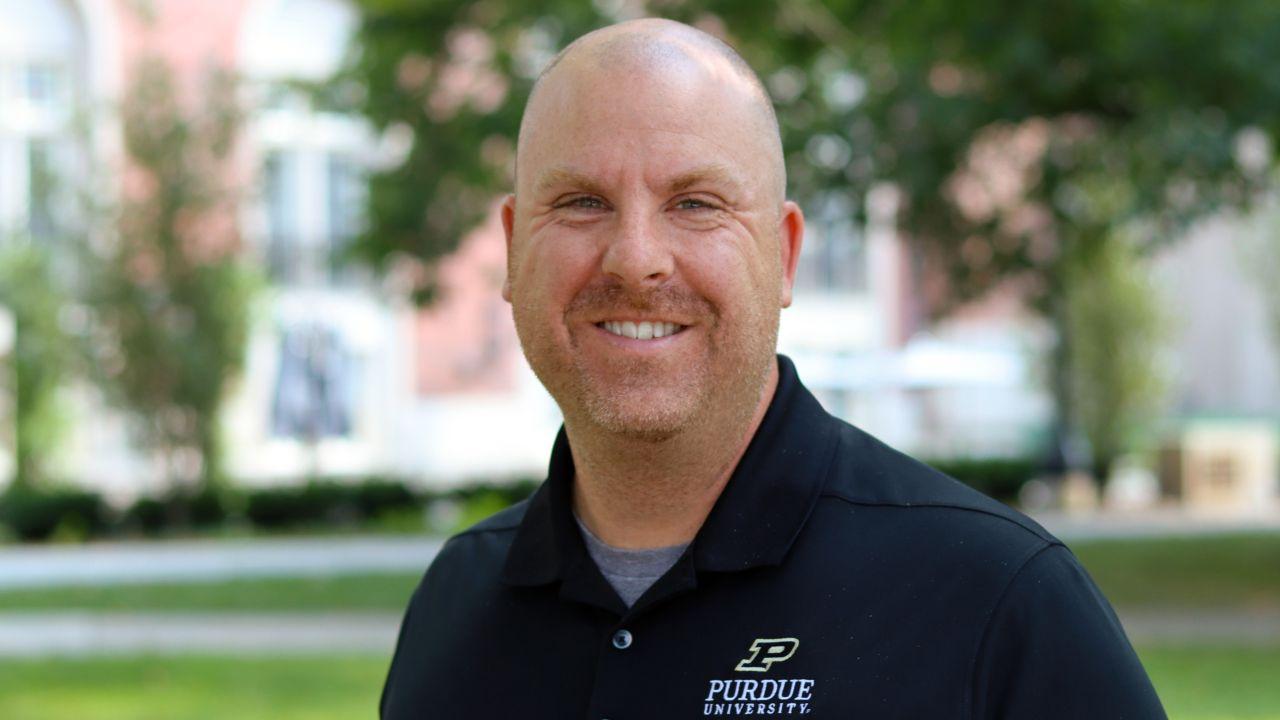
A new book coauthored by Chris Rogers, assistant dean of Purdue Polytechnic in Indianapolis, has just been published. The new title explores how cross-disciplinary teams build world-class themed entertainment experiences.
Rogers coauthored "Working Wonders: The Creative Engine Behind World-Class Teams" with Rodney Heiligmann. Heiligmann serves as the president of LF Studios, which boasts an extensive list of clients in the worlds of art, entertainment, education and more. The authors examine how engineers, 3D modelers, writers and fabricators collaborate to build theme park attractions and immersive museum exhibits.
Higher education-and frankly most industries-rarely replicate the specific work environment and team structure that has proven effective in the themed entertainment industry. Even when students must embark on capstone projects for their degrees, their teammates and other collaborators are often peers from similar disciplines.
"In higher education, traditionally the environments that are common in themed entertainment aren't often represented," Rogers said. "So it's very rare to encounter a situation where, you know, the mechanical engineer, the creative writer and the designer are working on a capstone together. But that's the way this particular world functions."
Rogers and Heiligmann wrote "Working Wonders" to address this educational gap. Rogers primary contribution was to conduct interviews with seasoned professionals at major design firms and studios.
The results of these interviews frequently dispel common industry misconceptions. Interviewees expressed the sentiment that high-ranking titles like "creative director" are, in reality, not positions that anyone can study directly. In reality, successful newcomers often start in entry-level roles, eventually becoming more specialized subject matter experts, and after building their skills find themselves in positions of greater creative agency later in their careers.
"[My interview subjects] came from different disciplines," Rogers said. "A lot came from theater. Some came from architecture, or from animation, or graphic design. And at no point in their career did they stop the forward progress and say 'well, I'm just going to be a graphic designer, and that's all I'm going to do.' Everyone learned how to evolve over time."
"It is in large part a call for companies to understand how their teams interact. It's also a call to students to understand how they can work in these types of environments, and it is a call to education to rethink how we teach."
Rogers also thinks it is important for students to read perspectives from industry insiders because it gives them a sense of the most challenging, even time-consuming aspects of concept design and client work. He noted that companies discard the vast majority of early attraction ideas. Teams sometimes work on a single concept for years, "and that doesn't necessarily mean it won't get canceled," Rogers said. Successful professionals survive this process by learning the quirks and processes of each client, which gives contractors in themed entertainment a better chance to preempt clients' needs.
Rogers views this interdisciplinary teamwork as a largely uncharted frontier in higher education. "The industry needs professionals who can communicate across boundaries," he said. The new publication provides a practical guide for building those essential relationships.
"Working Wonders: The Creative Engine Behind World-Class Teams" is currently available for purchase and faculty review.
Additional information